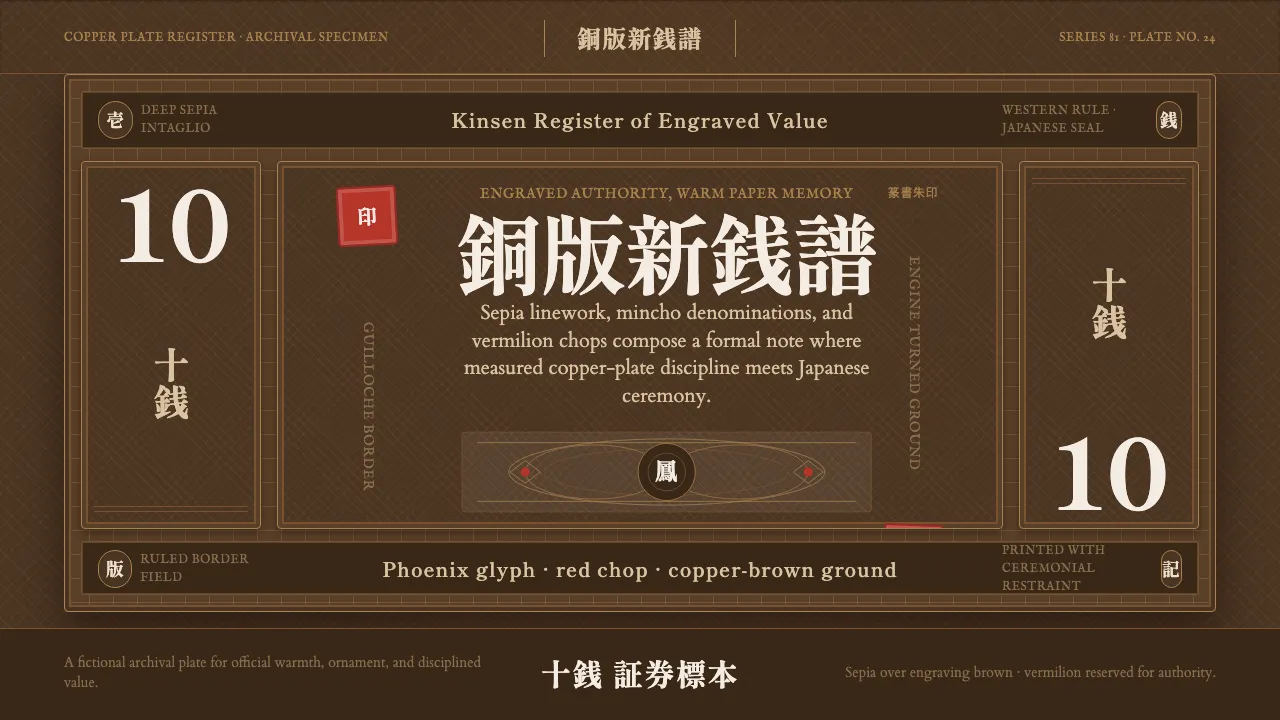
About Meiji Japan Note
In 1881 the Meiji government's Imperial Printing Bureau issued the 改造紙幣, the first banknotes engraved on Japanese soil to a European standard. The Italian master Edoardo Chiossone cut the copper plates by hand, laying intaglio cross-hatching and engine-turned guilloche beneath phoenix and dragon motifs drawn from Japanese tradition.
The result is 和洋折衷 made tangible: Latin lettering and Western intaglio discipline sit beside kanji denominations and red 篆書 seal chops. The palette is earthen — copper-plate sepia line work over a deep engraving-brown ground, with warm paper fields carrying value.
- Origin
- Tokyo, Japan (Imperial Printing Bureau)
- Era
- 1881 onward (Meiji period); 改造紙幣 reformed paper currency
- Key figures
- Edoardo Chiossone · Imperial Printing Bureau 印刷局
- Movements
- 和洋折衷 Japanese-Western fusion · European intaglio copper-plate engraving
Meiji Japan Note design spec
Colors
Typography
The other 11 sections — buttons, cards, spacing, motion, techniques and more — open once you unlock. Download the DESIGN.md or send it to your AI in one click. Unlock once, yours forever.
Sign up nowStyles similar to Meiji Japan Note
Also inspired by print & type, with a close feel.
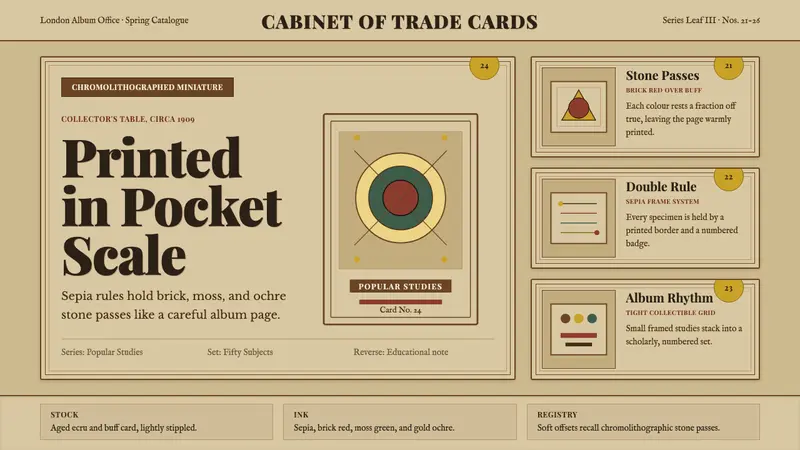 Cigarette Card SetCollectible scholarship. Sepia double-rules, buff stock, and ochre badges frame the set.
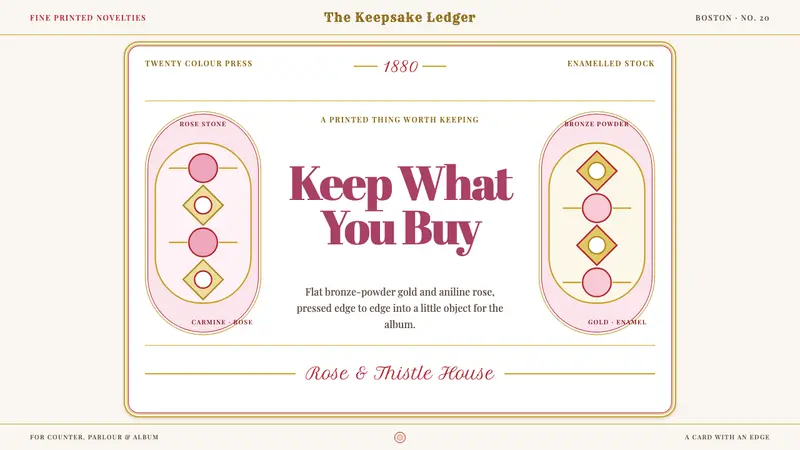 Victorian Chromo Trade CardAdvertising made collectible. Flat bronze gold and aniline rose fill an enamelled, framed card.
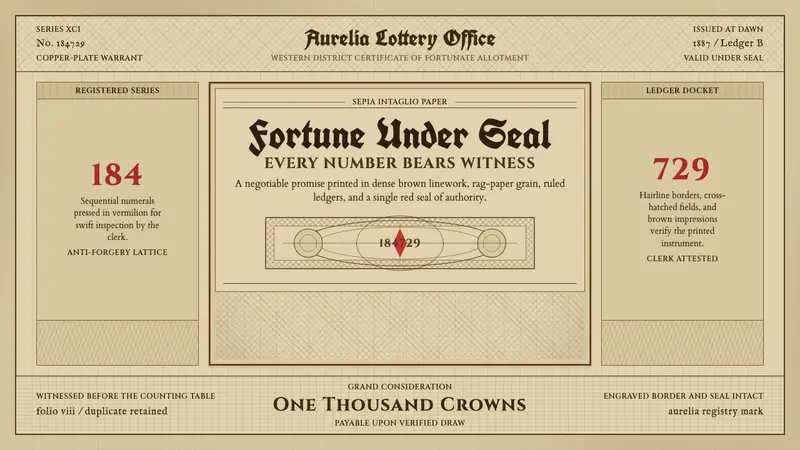 Engraved Lottery TicketLegal gravity in sepia. Guilloche borders, blackletter type, and a vermilion seal.
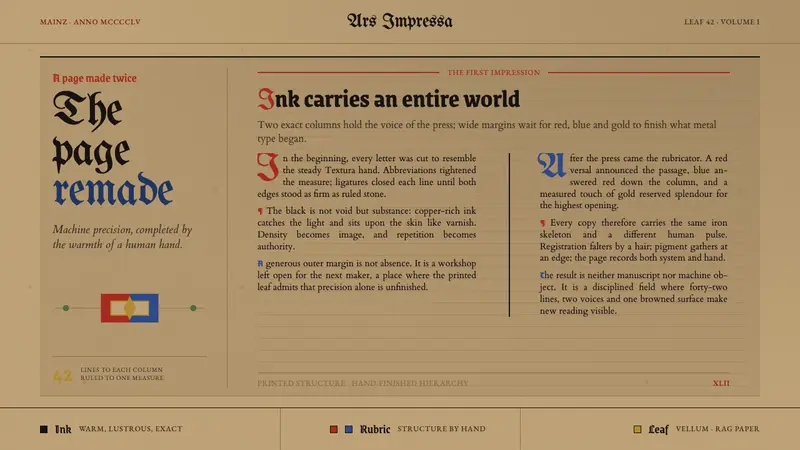 Gutenberg 42-Line BiblePrecision awaits the hand. Dense black columns open into red, blue and gold on browned vellum.