About Jain Kalpasutra Manuscript
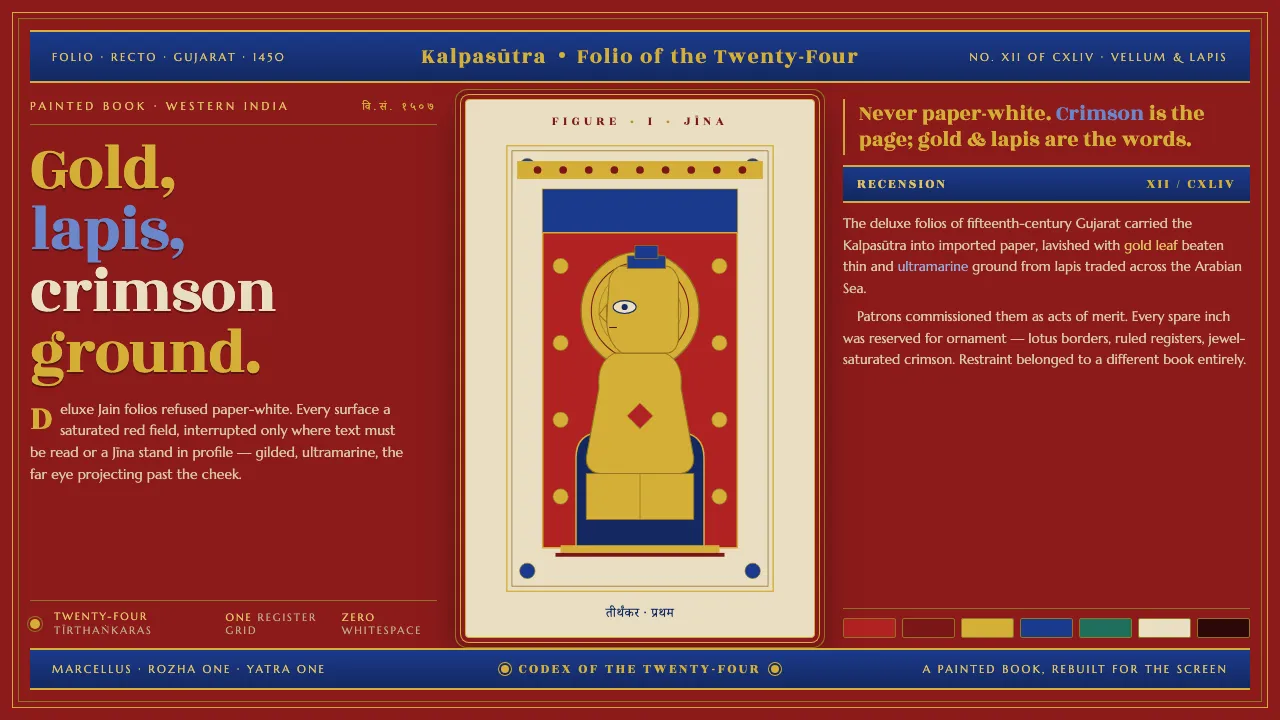
The deluxe Jain Kalpasutra manuscripts of mid-15th-century Gujarat are among the most opulent painted books of South Asia: text bands and miniature panels laid over a ground of intense crimson, with figures worked in gold leaf and ultramarine ground from imported lapis lazuli. The Tirthankaras stand in strict angular profile, the far eye bulging out past the cheek — a signature convention — ringed by lotus and floral borders. This system carries that materiality into the interface: a saturated red field, never paper-white; gold and lapis as the precious foreground; off-white reserved only for text fields and figure panels, the way vellum surfaces interrupt the painted ground.
- Origin
- Western India (Gujarat), the Gujarati-Sultanate milieu
- Era
- pre-1900; deluxe Kalpasutra manuscripts, mid-15th century
- Key figures
- Jain scribes of Western India · Kalpasutra manuscript painters · Jain lay patrons commissioning deluxe folios
- Movements
- Western-Indian Jain manuscript painting · Kalpasutra illustration tradition
Jain Kalpasutra Manuscript design spec
Colors
Typography
The other 11 sections — buttons, cards, spacing, motion, techniques and more — open once you unlock. Download the DESIGN.md or send it to your AI in one click. Unlock once, yours forever.
Sign up nowStyles similar to Jain Kalpasutra Manuscript
Also inspired by crafts & folk art, with a close feel.
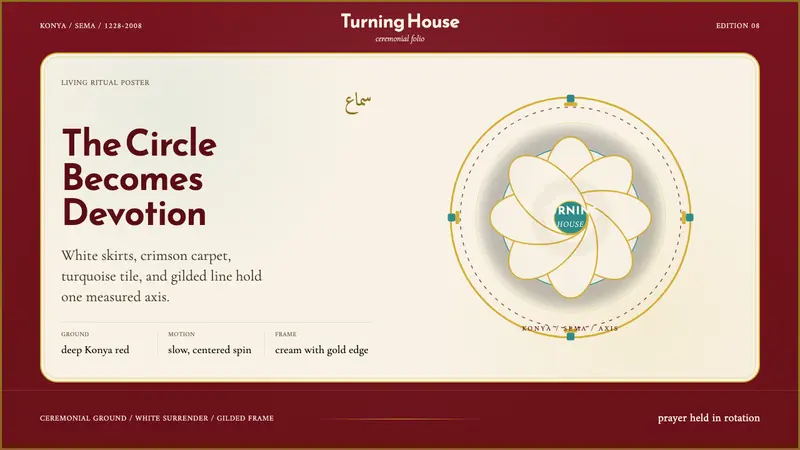 Sufi Whirling (Konya)Ritual in motion. Crimson field, white arcs, turquoise tile, and gold filigree.
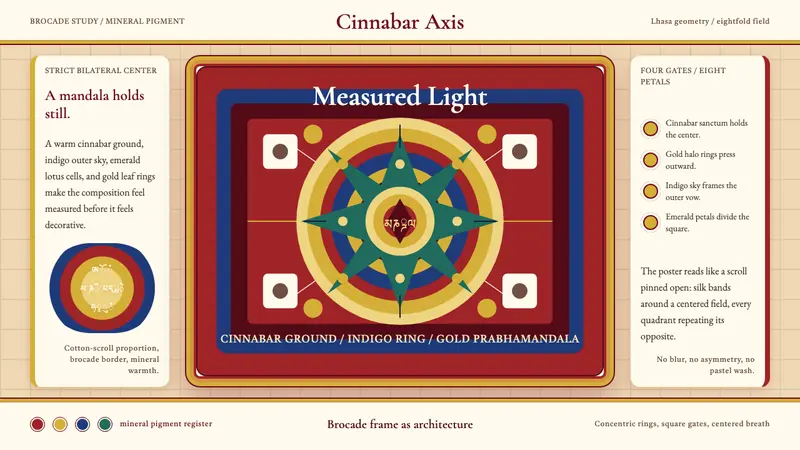 Tibetan Thangka MandalaSacred order burns warm. Cinnabar symmetry, gold halos, indigo rings, brocade frame.
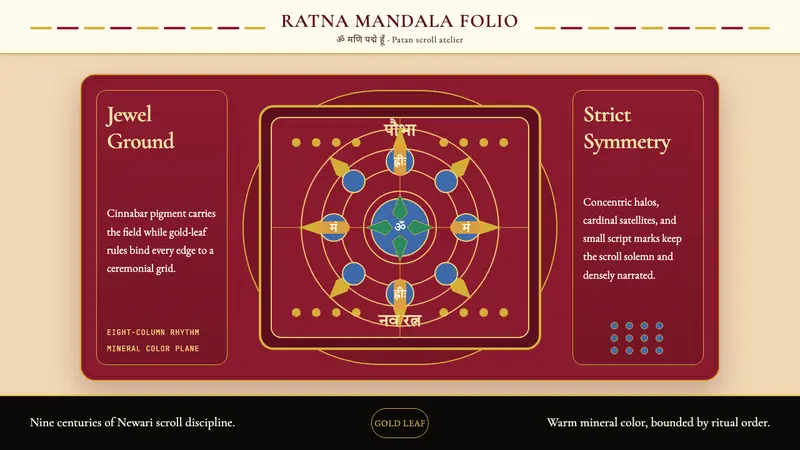 Nepali Paubha (Newari Scroll)Sacred density. Cinnabar ground, gold-leaf frame, lapis rings in strict symmetry.
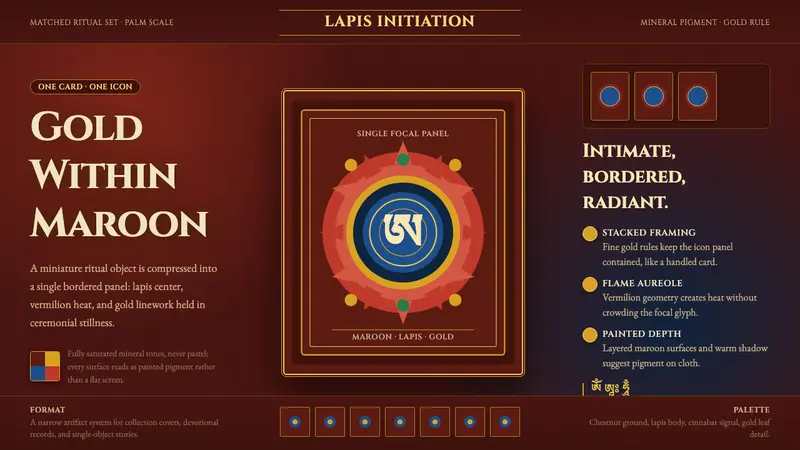 Tibetan Tsakli Initiation CardsPalm-sized radiance. Gold rules, lapis centers, and vermilion flame on maroon pigment.