About Israeli Bauhaus Tel Aviv (White City)
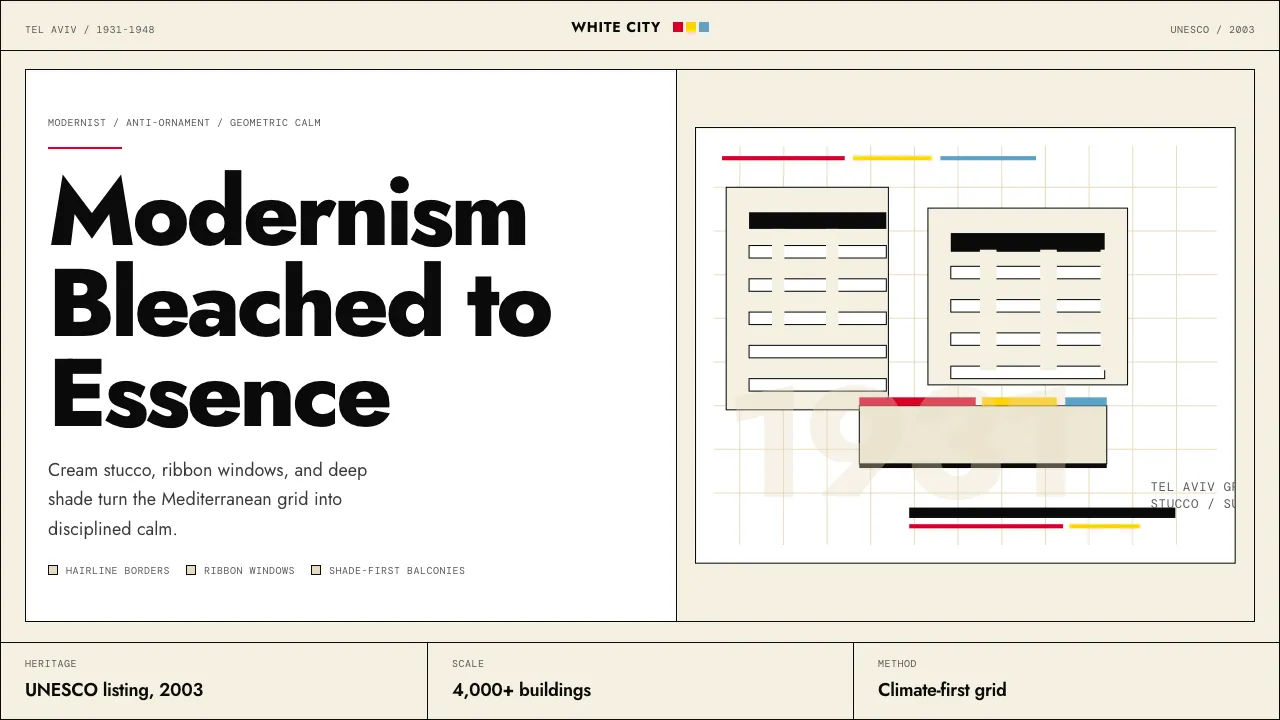
The White City of Tel Aviv is the world's largest concentration of Bauhaus architecture — over 4,000 buildings erected between 1931 and 1948 by German-Jewish architects who fled Nazi Europe, most having studied at Bauhaus Dessau. Their cream-white stucco facades, ribbon windows, and cantilevered balconies adapted European modernism to the Mediterranean climate, creating a cityscape that UNESCO inscribed as a World Heritage Site in 2003.
This design system distills that vocabulary: warm stucco-white grounds, rigorous geometric sans typography, hairline borders, and restrained Bauhaus-primary accents used only for emphasis — never decoration.
Learn more about the Israeli Bauhaus Tel Aviv (White City) style
- Origin
- Tel Aviv, Israel
- Era
- 1931–1948 construction peak; UNESCO World Heritage 2003; conservation ongoing
- Key figures
- Arieh Sharon · Zeev Rechter · Genia Averbuch · Patrick Geddes
- Movements
- Bauhaus · International Style · Jewish-emigré modernism
Israeli Bauhaus Tel Aviv (White City) design spec
Colors
Typography
The other 11 sections — buttons, cards, spacing, motion, techniques and more — open once you unlock. Download the DESIGN.md or send it to your AI in one click. Unlock once, yours forever.
Sign up nowStyles similar to Israeli Bauhaus Tel Aviv (White City)
Also inspired by architecture & places, with a close feel.
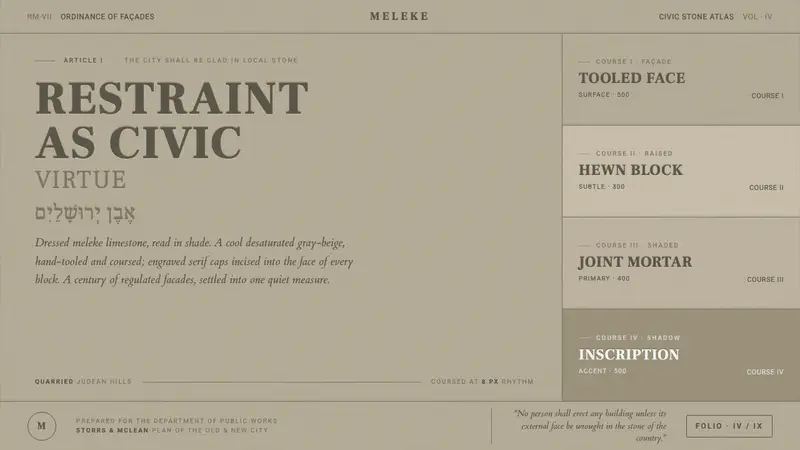 Jerusalem Stone GrayRestraint as civic virtue. Cool dressed-limestone gray-beige, ashlar coursing, engraved serif caps.
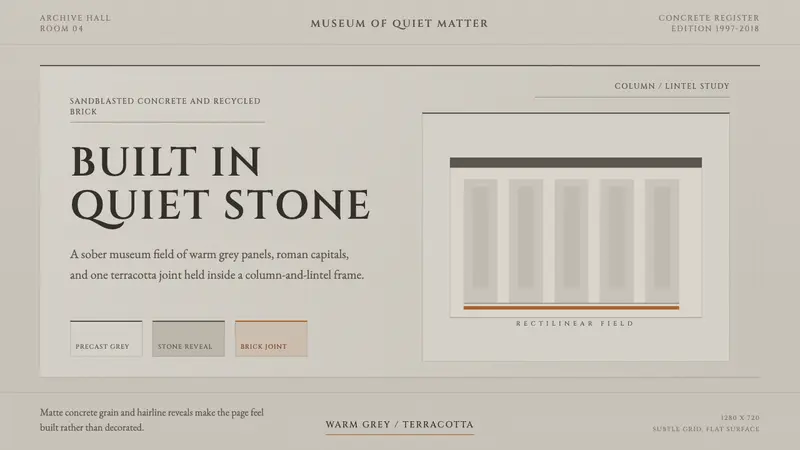 Chipperfield Museum GrayMuseum gravity, rendered quietly. Warm concrete grey, roman capitals, one terracotta joint.
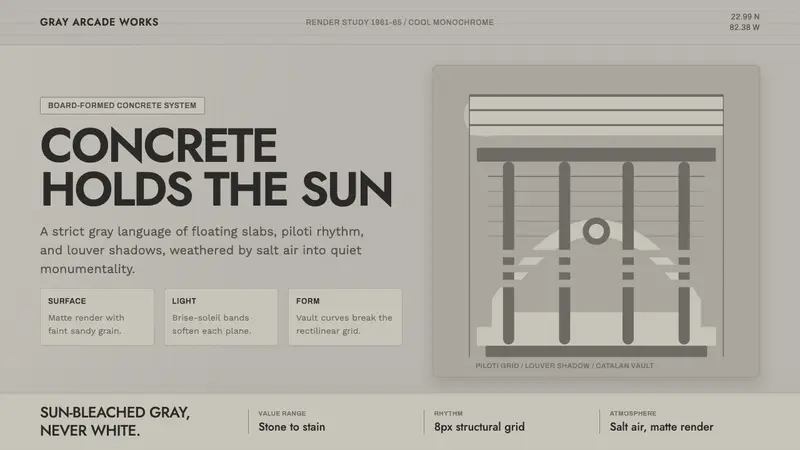 Havana Modernist GrayQuiet monumentality. Jost type, louver bands, and concrete grays hold tropical light.
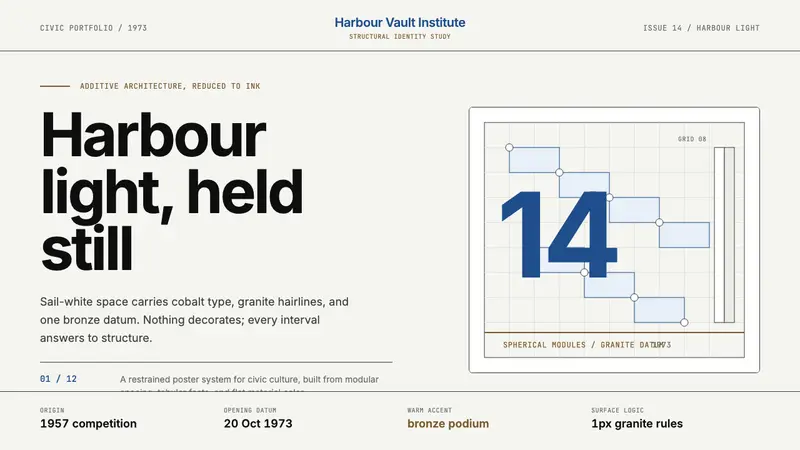 Sydney Opera House (Utzon, 1973)Civic restraint in harbour light. Sail-white space, cobalt type, bronze datum.