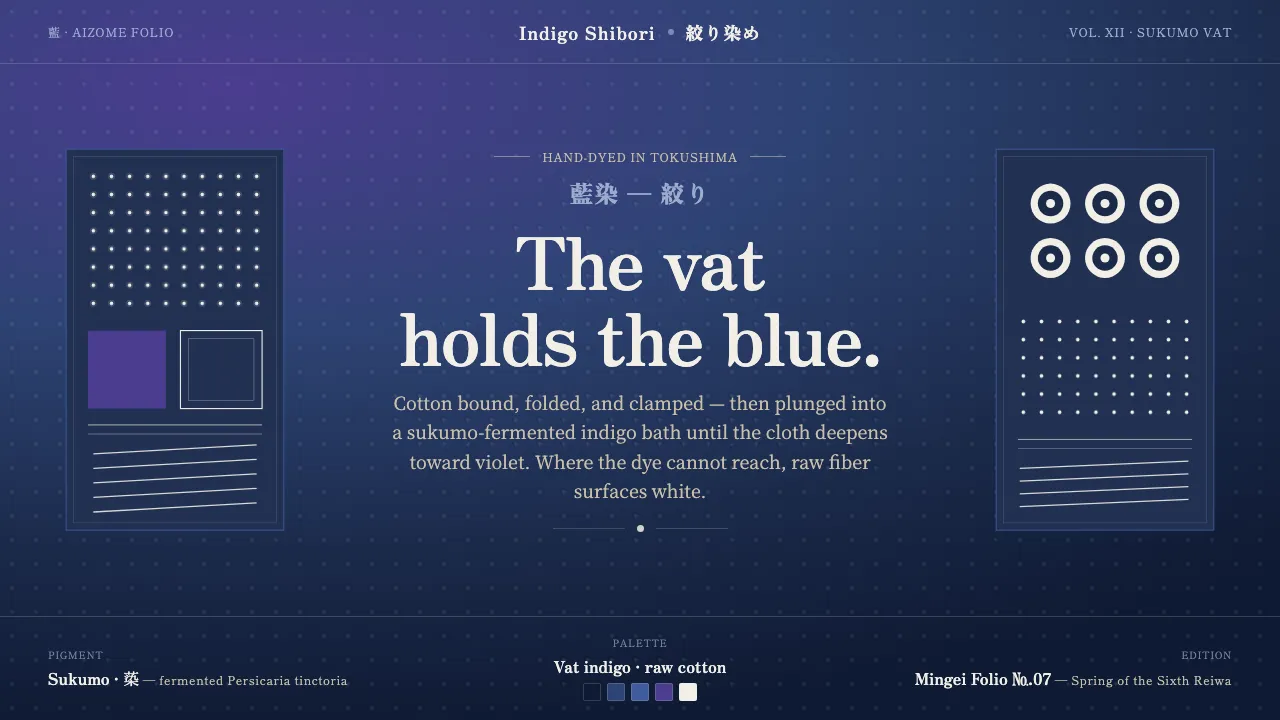
About Indigo Shibori
Indigo Shibori is the visual language of Japanese aizome — cotton plunged into a fermented sukumo-indigo vat until it holds a deep blue pushed toward violet. Binding, folding, and clamping the cloth keeps dye from reaching the fibers, so crisp raw-cotton whites surface against an unevenly pooled ground.
As a design system it honors immersion and resist: a dark indigo field, kanoko dot grids, itajime geometric clamps, arashi diagonal striping, and an off-white that is never pure paper. The ground is dyed cloth, authentically never cream.
- Origin
- Japan (East Asia)
- Era
- Edo-period folk textile (pre-1900) through today; living craft tradition
- Key figures
- anonymous aizome dye-masters · shibori artisans · sukumo-fermented indigo dye houses
- Movements
- Aizome (Japanese indigo dyeing) · Shibori resist-dye (kanoko, itajime, arashi) · Mingei folk-textile craft
Indigo Shibori design spec
Colors
Typography
The other 11 sections — buttons, cards, spacing, motion, techniques and more — open once you unlock. Download the DESIGN.md or send it to your AI in one click. Unlock once, yours forever.
Sign up nowStyles similar to Indigo Shibori
Also inspired by crafts & folk art, with a close feel.
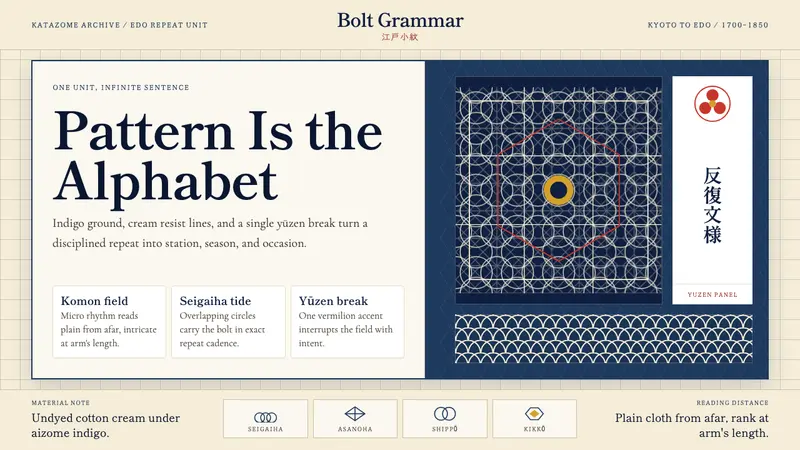 Edo Kimono TextilePattern becomes language. Indigo repeats, cream resist lines, one vermilion panel breaks the field.
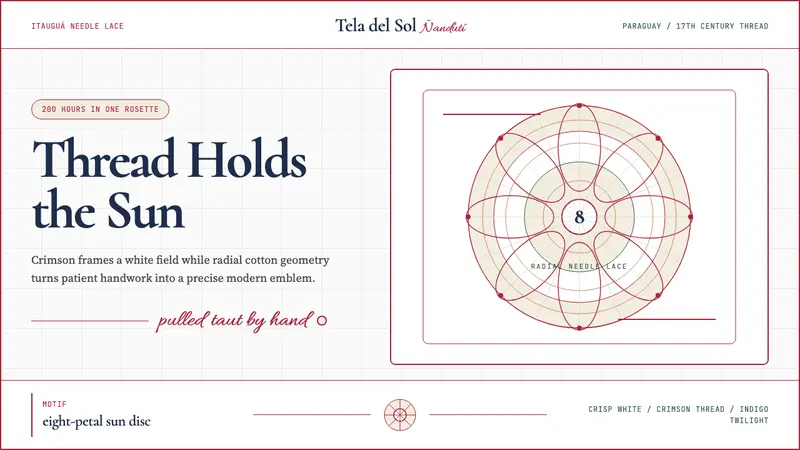 Paraguayan Ñandutí LacePatient craft, modern frame. Crimson lines pin radial lace on crisp white.
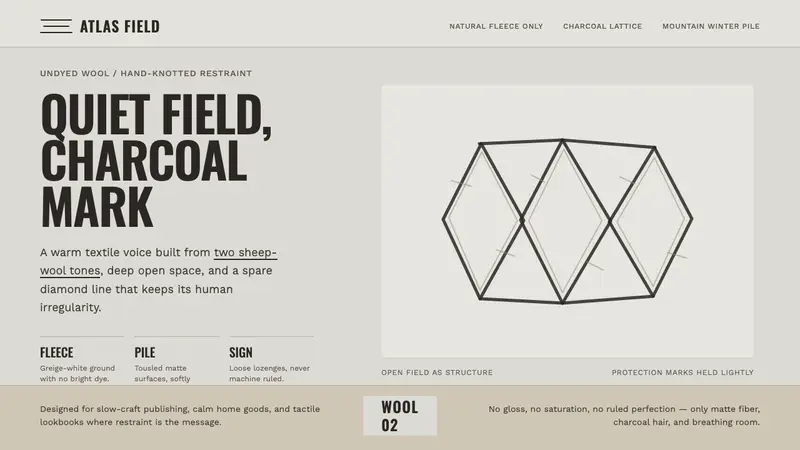 Beni Ourain Berber CarpetRestraint feels tactile. Greige wool field, Oswald type, and a loose charcoal lattice.
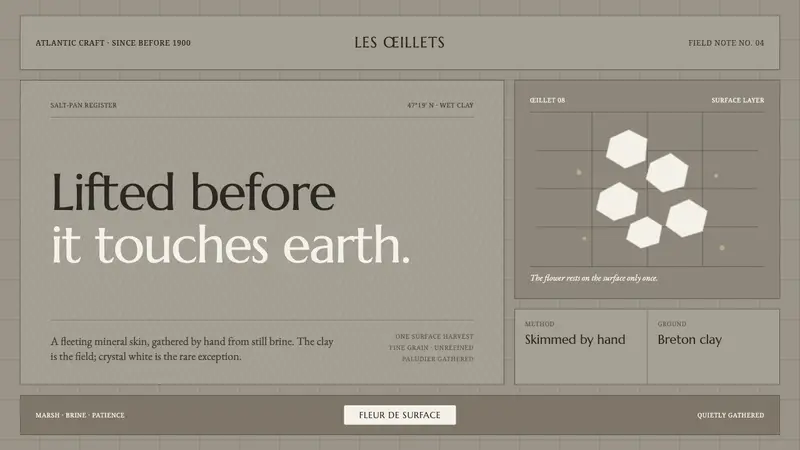 Guérande Fleur de SelCrystal white is the exception. Mineral serif and hairline grids rise from wet clay-grey.