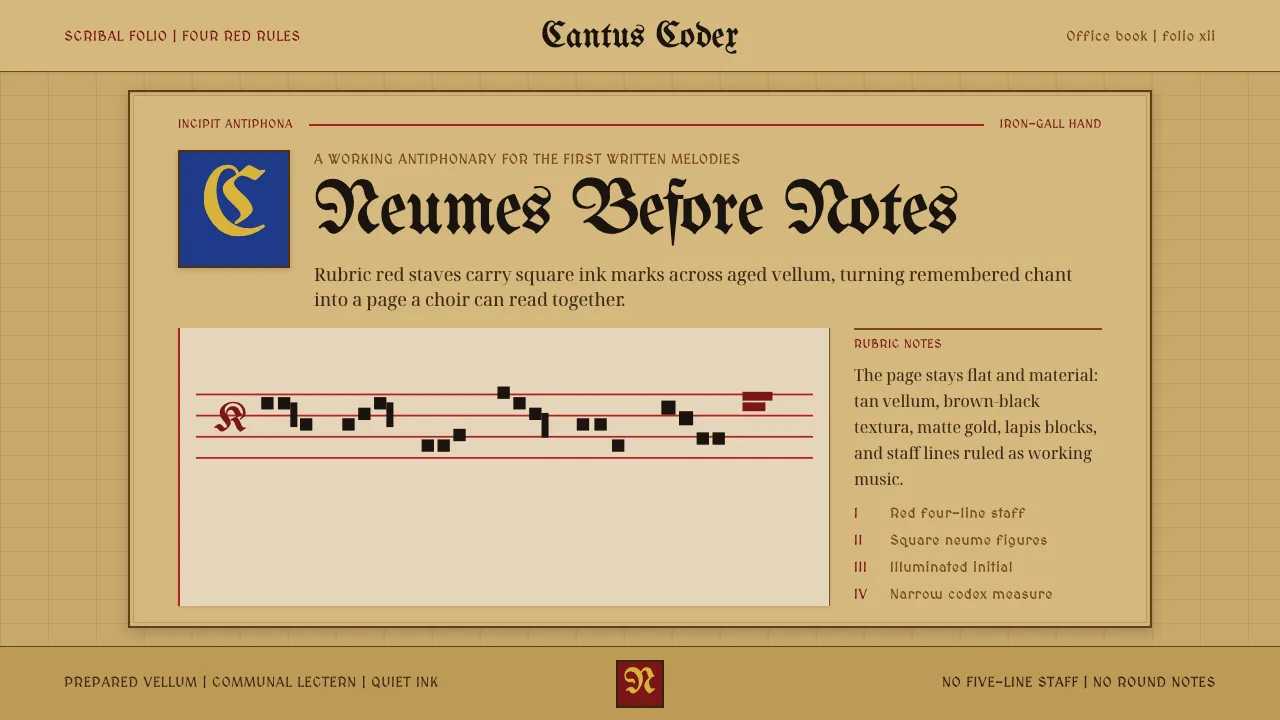
About Gregorian Chant Neumes
Before the five-line staff and round notes, plainchant lived as black square neumes ruled across four red lines on calfskin vellum. This is notation at its origin: a monk's hand in iron-gall ink, gold and lapis initials marking the start of each chant, red rubrics naming the feast.
The system codifies that scriptorium. Saturated tan vellum carries rubric red, brown-black textura, and the matte gilding of illuminated capitals — a working liturgical book, not a museum reproduction.
- Origin
- Western Europe (monastic scriptoria)
- Era
- c.1000–1300, high medieval monastic scriptorium
- Key figures
- Guido of Arezzo
- Movements
- Gregorian chant · manuscript illumination · gothic textura
Gregorian Chant Neumes design spec
Colors
Background
Surface
Primary
Secondary
Accent
Text
Typography
UnifrakturMaguntiaHeadings
Noto Serif DisplayBody
MedievalSharpMono
Unlock for 1 credit
The other 11 sections — buttons, cards, spacing, motion, techniques and more — open once you unlock. Download the DESIGN.md or send it to your AI in one click. Unlock once, yours forever.
Sign up nowHave an account? Sign in
Styles similar to Gregorian Chant Neumes
Also inspired by print & type, with a close feel.
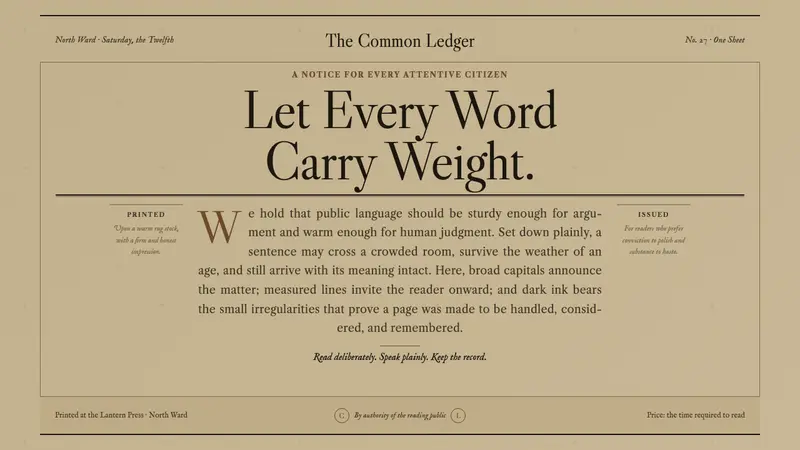 Caslon English Text SerifWarm authority, pressed into paper. Caslon capitals and engraved rules command an amber-grey sheet.
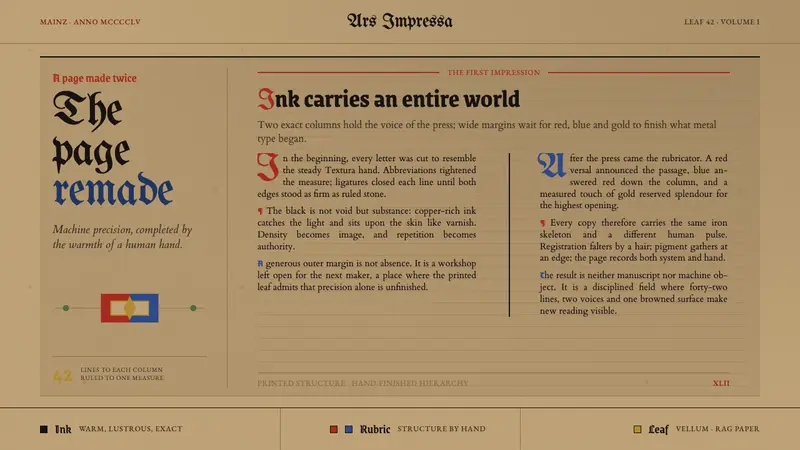 Gutenberg 42-Line BiblePrecision awaits the hand. Dense black columns open into red, blue and gold on browned vellum.
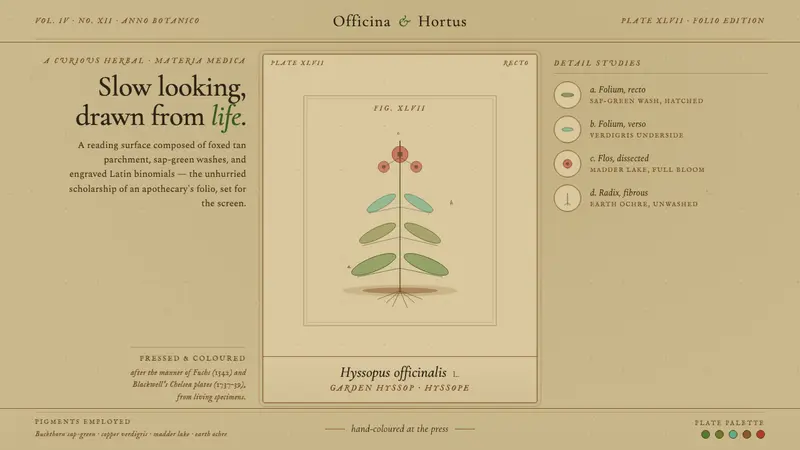 Herbal PharmacopoeiaSlow scholarship of the apothecary folio. Foxed tan parchment, sap-green washes, italic Latin names.
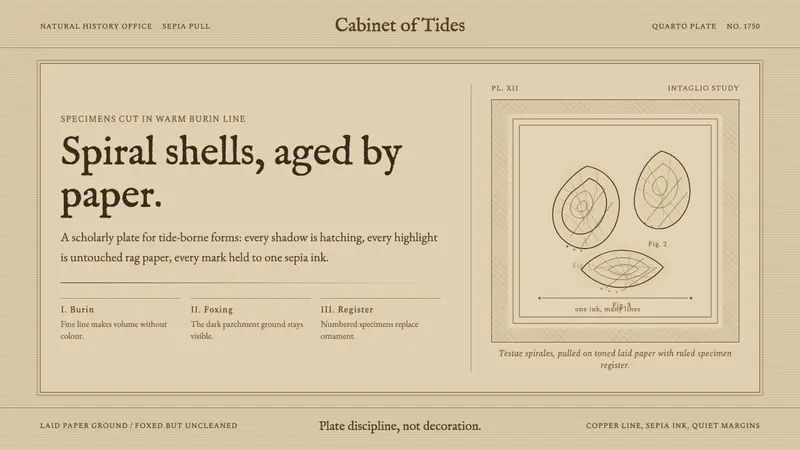 Conchology Shell PlateAged paper is the hero. Sepia Fell type and burin spirals make science feel antique.