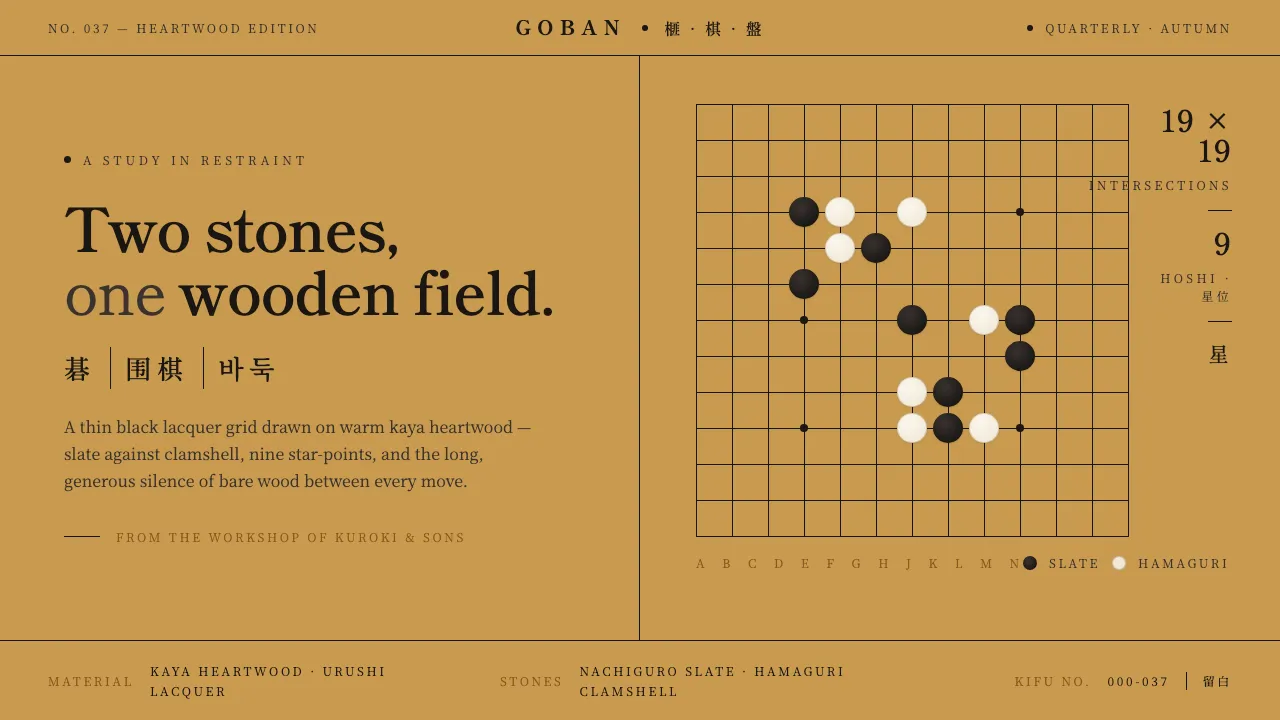
About Go / Baduk
The Go board — 碁 in Japan, 围棋 in China, 바둑 in Korea — is the defining surface of East Asian board-game culture: a 19×19 grid of thin black lines hand-drawn in urushi lacquer across the warm golden heartwood of a polished kaya goban.
Its aesthetic is one of extreme minimalism — bare wood as negative space, two stone colors, and the brush-record clarity of kifu game records. This system distills slate-black, clamshell-white, and honey-gold kaya into a digital language of austere flat wood and thin precise lines.
- Origin
- East Asia (Japan, China, Korea)
- Era
- pre-1900 (ancient origins in China; classical board craft refined in Japan and Korea)
- Key figures
- master goban makers (Kuroki Goishi-ten) · Nachiguro slate stone craftsmen · hamaguri clamshell stone craftsmen
- Movements
- East-Asian minimalist board-game aesthetic · 留白 negative space · kifu game-record clarity
Go / Baduk design spec
Colors
Typography
The other 11 sections — buttons, cards, spacing, motion, techniques and more — open once you unlock. Download the DESIGN.md or send it to your AI in one click. Unlock once, yours forever.
Sign up nowStyles similar to Go / Baduk
Also inspired by crafts & folk art, with a close feel.
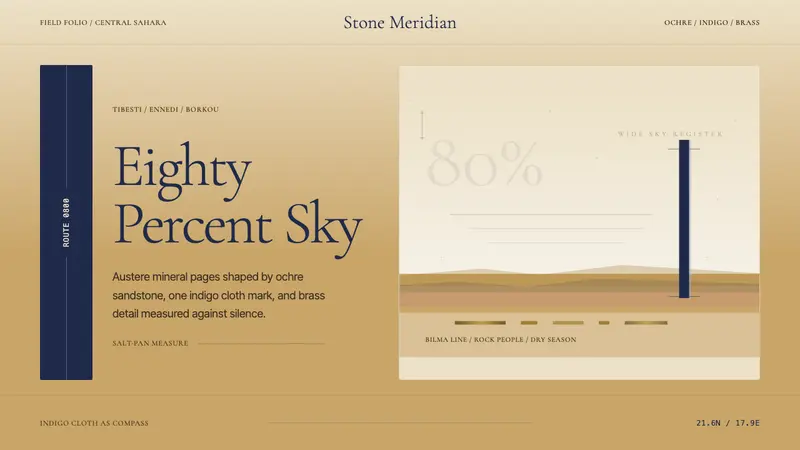 Chadian Toubou Saharan RouteRadical emptiness holds. Sandstone ochre, indigo serif, and one vertical mark cross the sky.
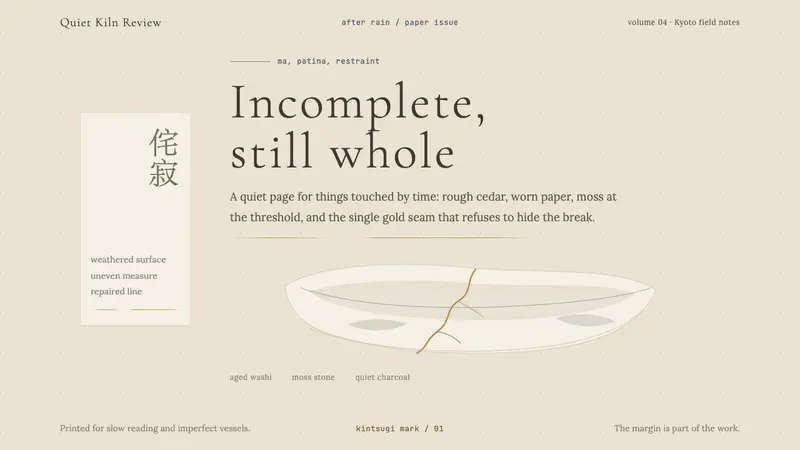 Wabi-SabiStillness makes imperfection whole. Washi beige, moss sage, and a spare gold seam hold the page.
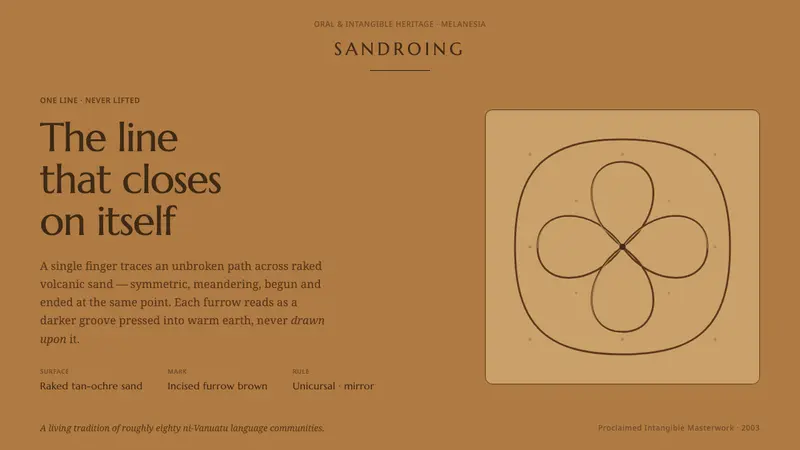 Vanuatu Sand DrawingOne finger-line, never lifted. Furrow-brown grooves a symmetric lattice into raked tan-ochre sand.
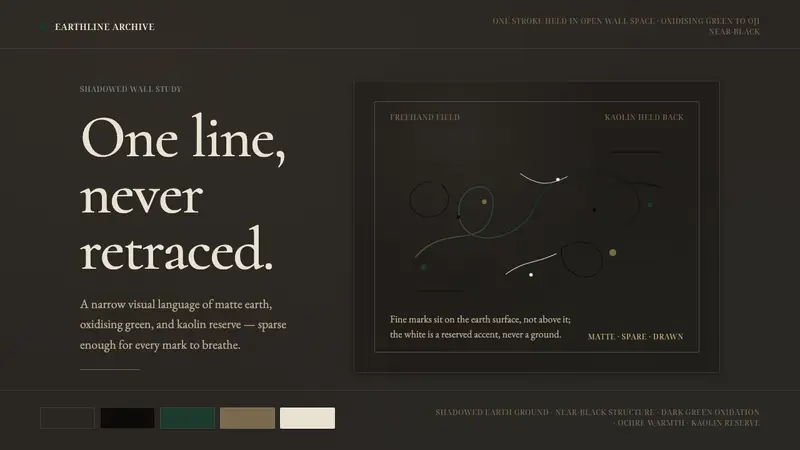 Igbo Uli Painting NigeriaSpare line carries the wall. Near-black curves breathe on dark earth with kaolin reserve.