About Fijian Masi (Tapa Cloth)
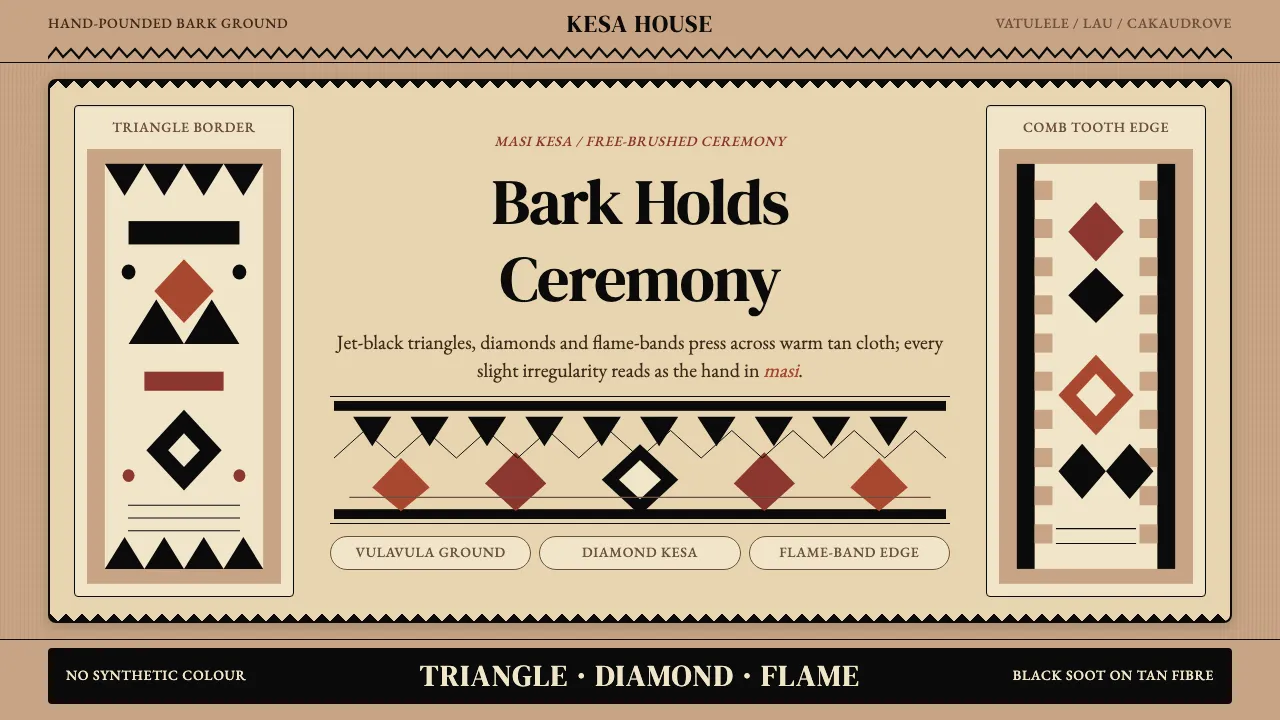
Fijian masi is the Pacific's most graphically bold bark-cloth tradition. Women pound paper-mulberry bark into wide tan tapa, then hand-paint jet-black triangles, diamonds, zigzags and flame-bands in free improvisational composition — distinct from Hawaiian kapa's finer stamped grid by its larger scale and stronger black-and-rust contrast.
The cloth carries ceremonial weight: weddings, funerals, chiefly installations. Slight brush-irregularity is not a flaw but the signature of human craft pressed into bark-fiber. The aesthetic reads as warm earth-tone monochrome punctuated by uncompromising black graphic punch.
- Origin
- Fiji (Vatulele, Cakaudrove, Kabara, Lau)
- Era
- 1000+ year Fijian bark-cloth lineage; ceremonial peak 1800s; continuous living practice through 20c–21c
- Key figures
- Rod Ewins · Fergus Clunie · Lucia Latukefu · anonymous Vatulele matrilineal masi-makers
- Movements
- Pacific bark-cloth tradition · Fijian cultural renaissance · Polynesian-Melanesian craft revival
Fijian Masi (Tapa Cloth) design spec
Colors
Typography
The other 11 sections — buttons, cards, spacing, motion, techniques and more — open once you unlock. Download the DESIGN.md or send it to your AI in one click. Unlock once, yours forever.
Sign up nowStyles similar to Fijian Masi (Tapa Cloth)
Also inspired by crafts & folk art, with a close feel.
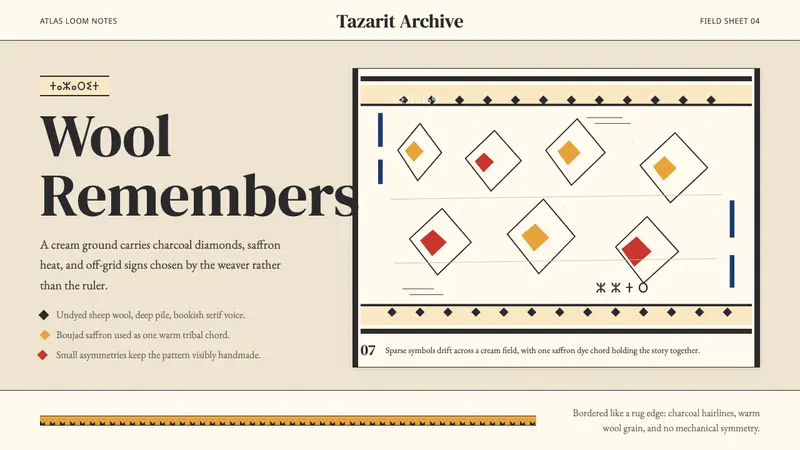 Moroccan Amazigh Berber RugAutobiography in wool. Cream ground, charcoal diamonds, saffron bands drift off-grid.
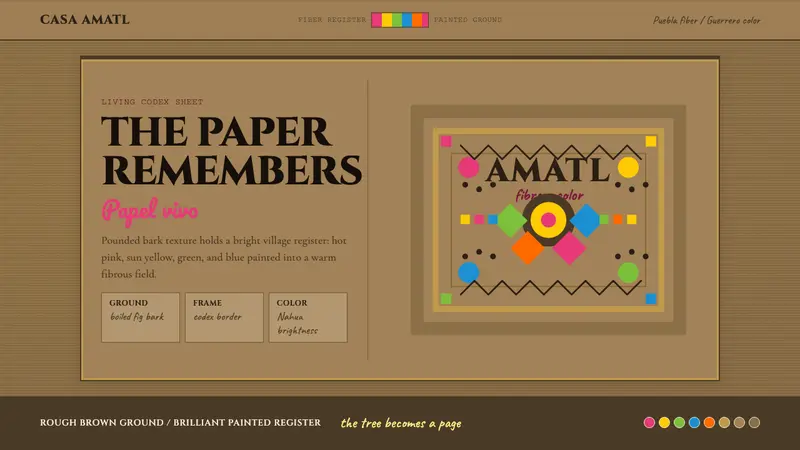 Mexican Amate Bark PaperLiving craft, not nostalgia. Bark-brown fiber carries hot pink and sun-yellow codex geometry.
 Pattachitra (Odisha Temple Scroll)Devotion as dense color. Vermilion bands and soot-black outlines stack like a temple scroll.
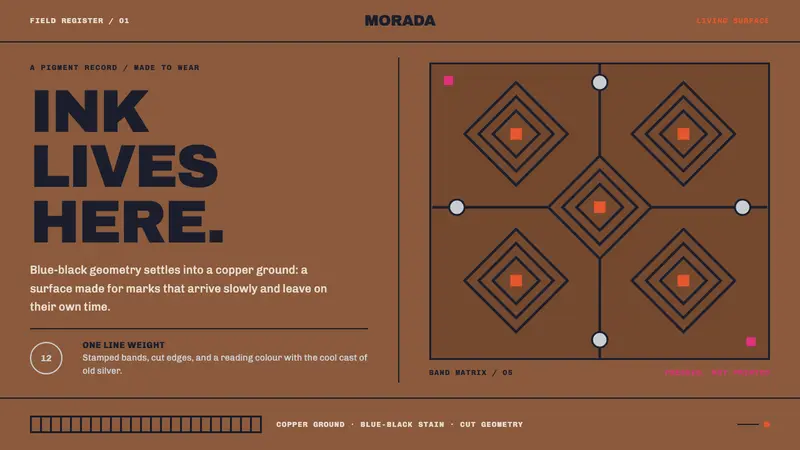 Emberá JaguaA living stain, never a print. Blue-black diamond bands press across copper skin.