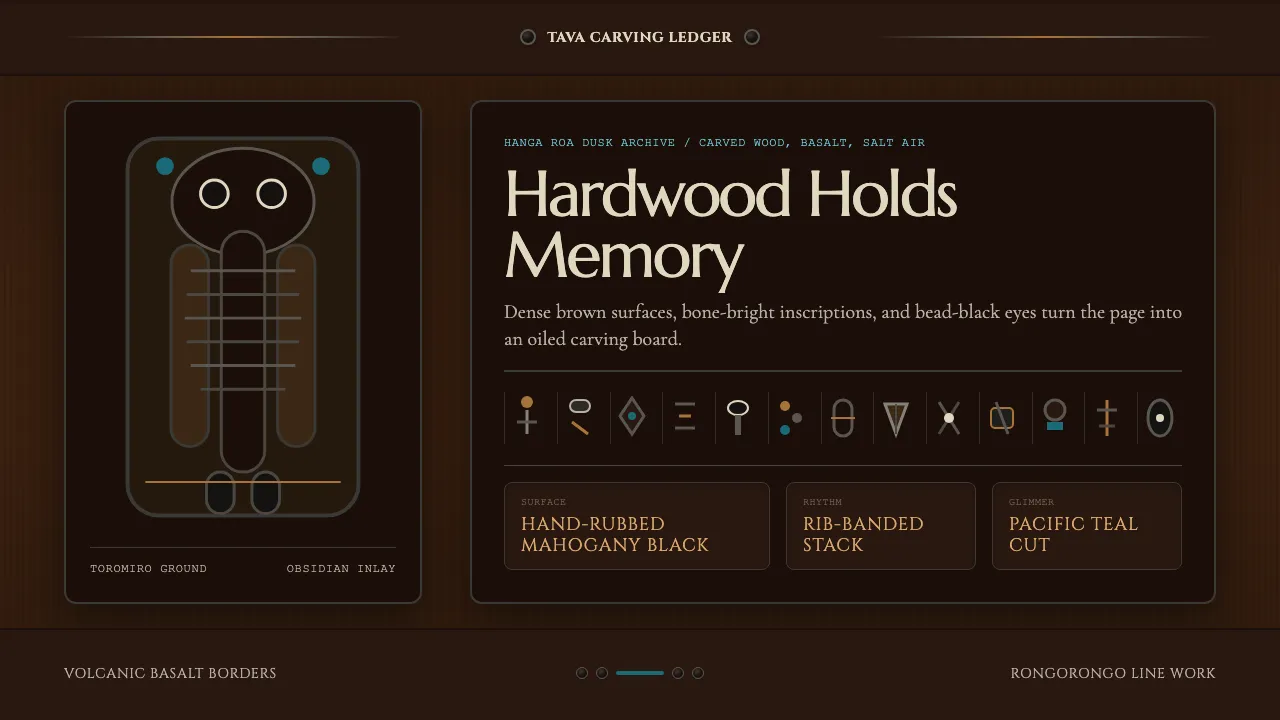
About Chilean Rapa Nui Toromiro (Easter Island)
Rapa Nui's carved-wood tradition is the most isolated Polynesian sculptural practice on earth. Pre-contact and 19th-century Rapanui carvers shaped compact ancestor figurines — moai kavakava with protruding ribs and sunken eyes — from toromiro hardwood, alongside rapa dance paddles and rongorongo inscribed boards in a script still undeciphered.
This design system channels the feeling of a Hanga Roa carving shed at dusk: deep toromiro brown grounds, polished mahogany-black surfaces, obsidian-bead accent inlays, volcanic-basalt grays, and rare Pacific-teal ocean glimmers. Typography echoes monumental carved letterforms; every surface carries the weight and density of hand-rubbed hardwood.
Learn more about the Chilean Rapa Nui Toromiro (Easter Island) style
- Origin
- Chile (Rapa Nui / Easter Island, Valparaíso Region)
- Era
- pre-contact 1300–1722; European contact 1722; revival 1960s–present
- Key figures
- Alfred Métraux · Father Sebastian Englert · Steven Roger Fischer · Catherine Orliac
- Movements
- pre-contact Polynesian sculpture · post-contact decline and revival · Rapanui cultural-rights movement
Chilean Rapa Nui Toromiro (Easter Island) design spec
Colors
Typography
The other 11 sections — buttons, cards, spacing, motion, techniques and more — open once you unlock. Download the DESIGN.md or send it to your AI in one click. Unlock once, yours forever.
Sign up nowStyles similar to Chilean Rapa Nui Toromiro (Easter Island)
Also inspired by crafts & folk art, with a close feel.
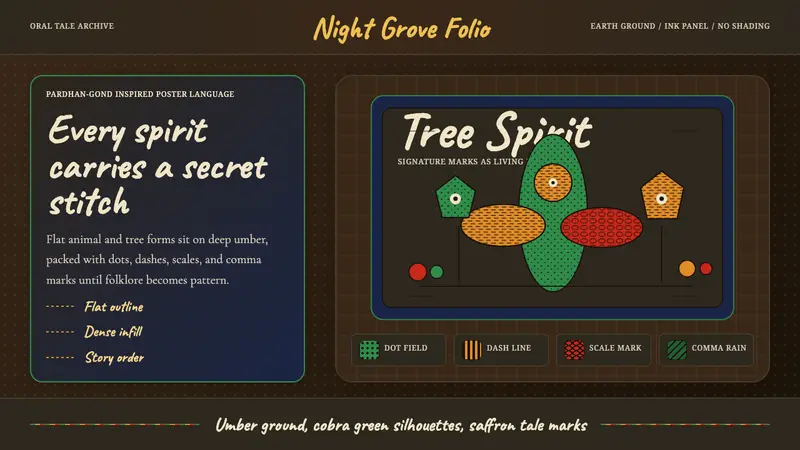 Gond Pardhan (Tree Spirit Painting)Story breathes in pattern. Cobra green forms on umber ground, filled with dots and dashes.
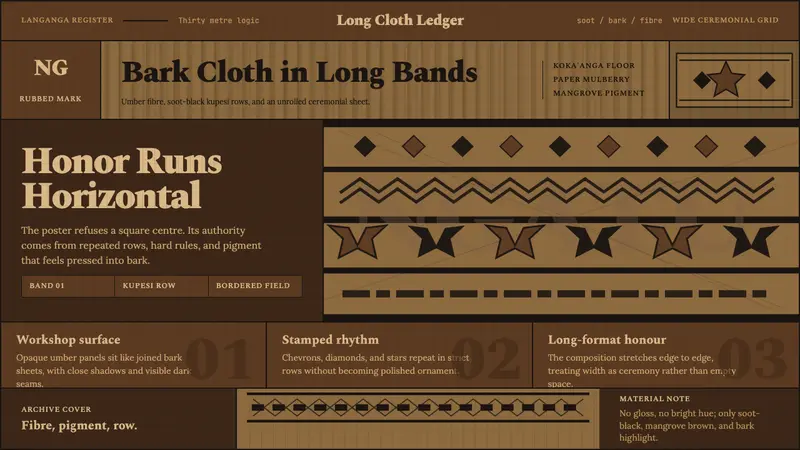 Tongan Ngatu (Tapa)Ceremony runs wide. Soot-black rows stamp umber bark with strict kupesi geometry.
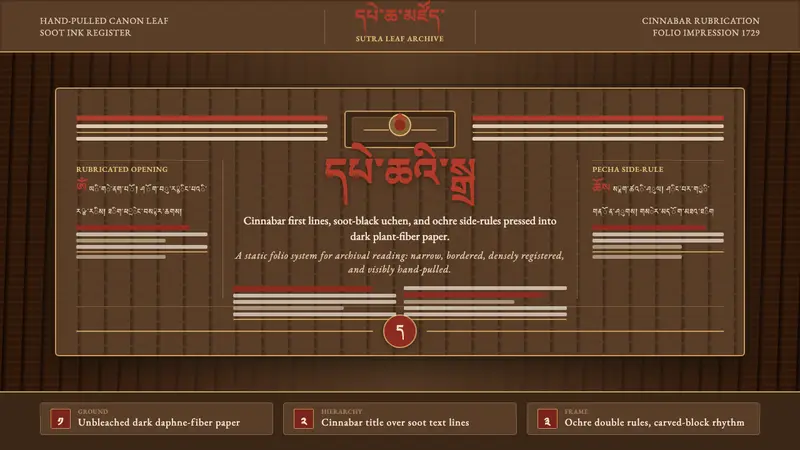 Derge Woodblock Sutra PrintHand-pulled scripture gravity. Cinnabar uchen and ochre rules press into dark fiber paper.
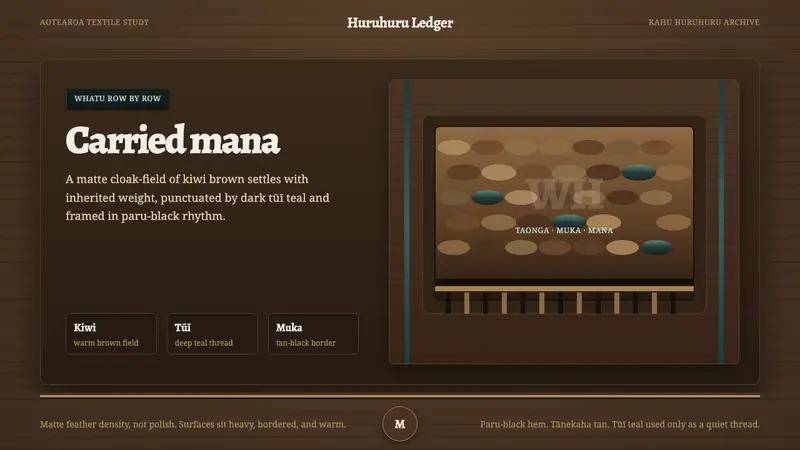 Māori Korowai Feather CloakInherited weight, held in brown. Kiwi feather rows meet sparse tūī teal and paru-black borders.