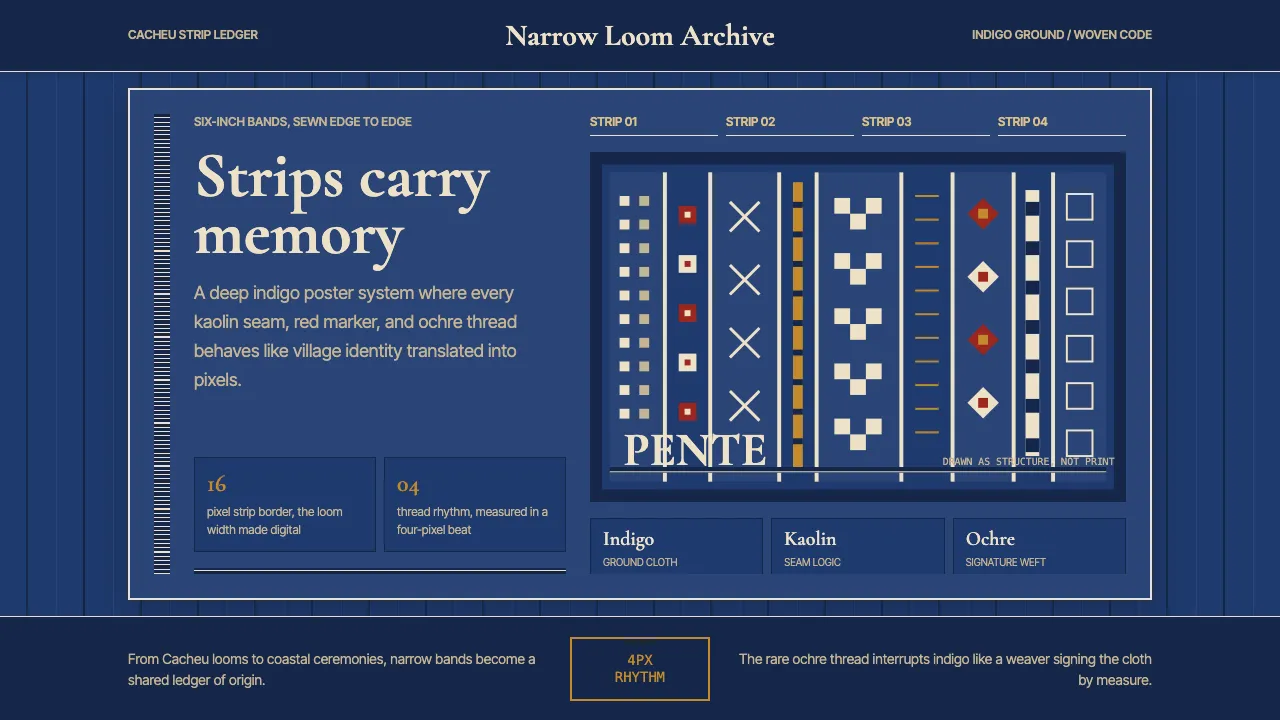
About Bissau-Guinean Pano de Pente
Pano de pente is the narrow-strip handwoven cotton textile of Guinea-Bissau — six-inch bands woven on small treadle looms by Manjaco and Pepel artisans, then sewn edge-to-edge into wide indigo-and-white cloths. Each strip carries a different geometric drawdown encoding village and weaver identity.
This design system translates the saturated indigo ground, the vertical stripe rhythm, and the weft-structure geometry of pano de pente into interface language — no print simulation, only the pure logic of woven structure rendered in pixels.
- Origin
- Guinea-Bissau (Cacheu, Biombo, Bijagós islands)
- Era
- pre-colonial origin, strip-weaving documented since 1500s; modern fashion revival 2010s
- Key figures
- Carlos Cardoso · Sarah Diouf · Lisa Aronson · Eric Robertson
- Movements
- West African strip-weave textile tradition · Atlantic indigo dye trade
Bissau-Guinean Pano de Pente design spec
Colors
Typography
The other 11 sections — buttons, cards, spacing, motion, techniques and more — open once you unlock. Download the DESIGN.md or send it to your AI in one click. Unlock once, yours forever.
Sign up nowStyles similar to Bissau-Guinean Pano de Pente
Also inspired by crafts & folk art, with a close feel.
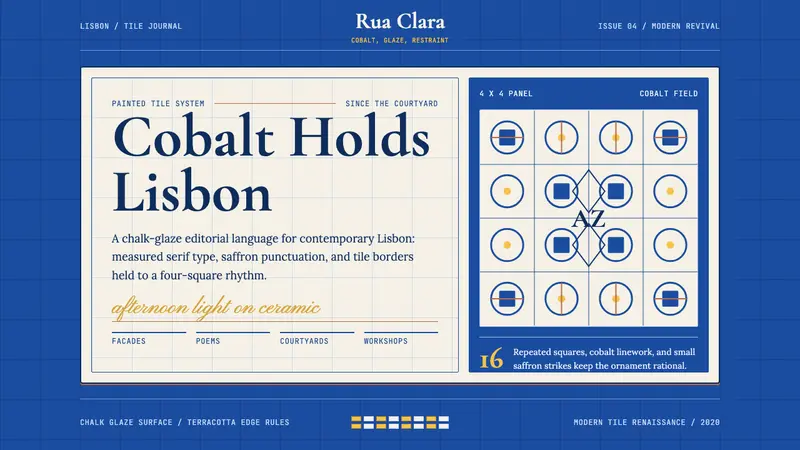 Portuguese Azulejo ModernCobalt turns editorial. Cream tile grids, Cormorant type, and saffron marks carry Lisbon restraint.
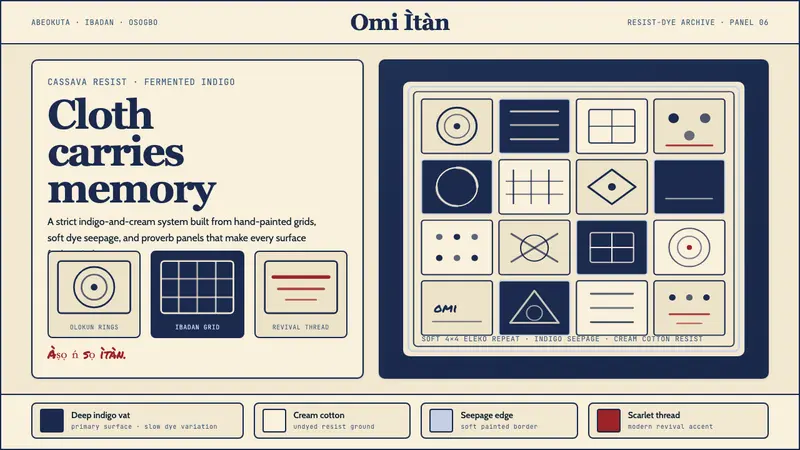 Yoruba Adire IndigoMemory lives in cloth. Deep indigo grids on cream cotton carry hand-painted proverb marks.
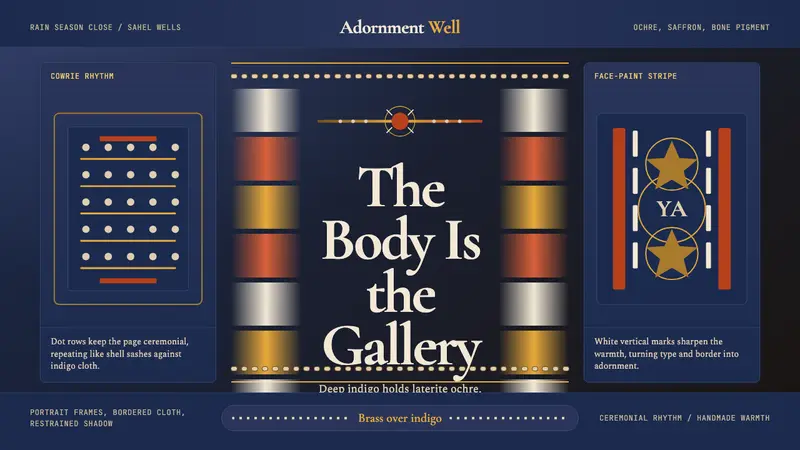 Wodaabe Gerewol Charm FestivalRitual intensity, ornamented. Indigo ground, ochre pigment, cowrie dots, brass linework.
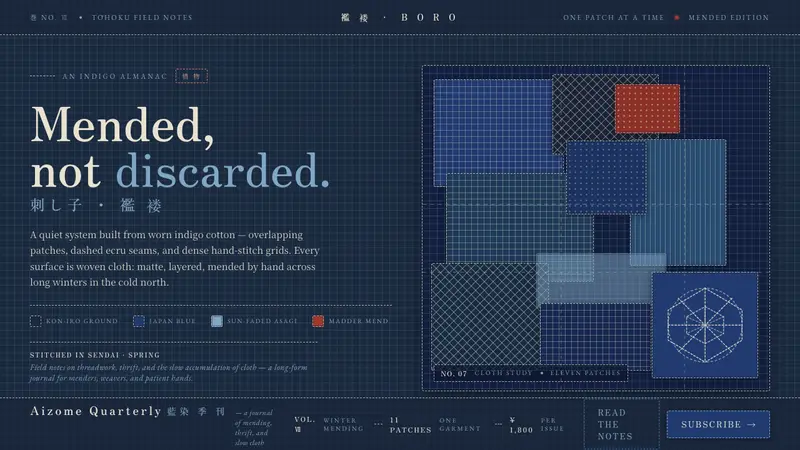 Sashiko BoroMended, not discarded. Deep kon-iro grounds, overlapping patches, dashed ecru running-stitch grids.