About Berlin Techno (Berghain era)
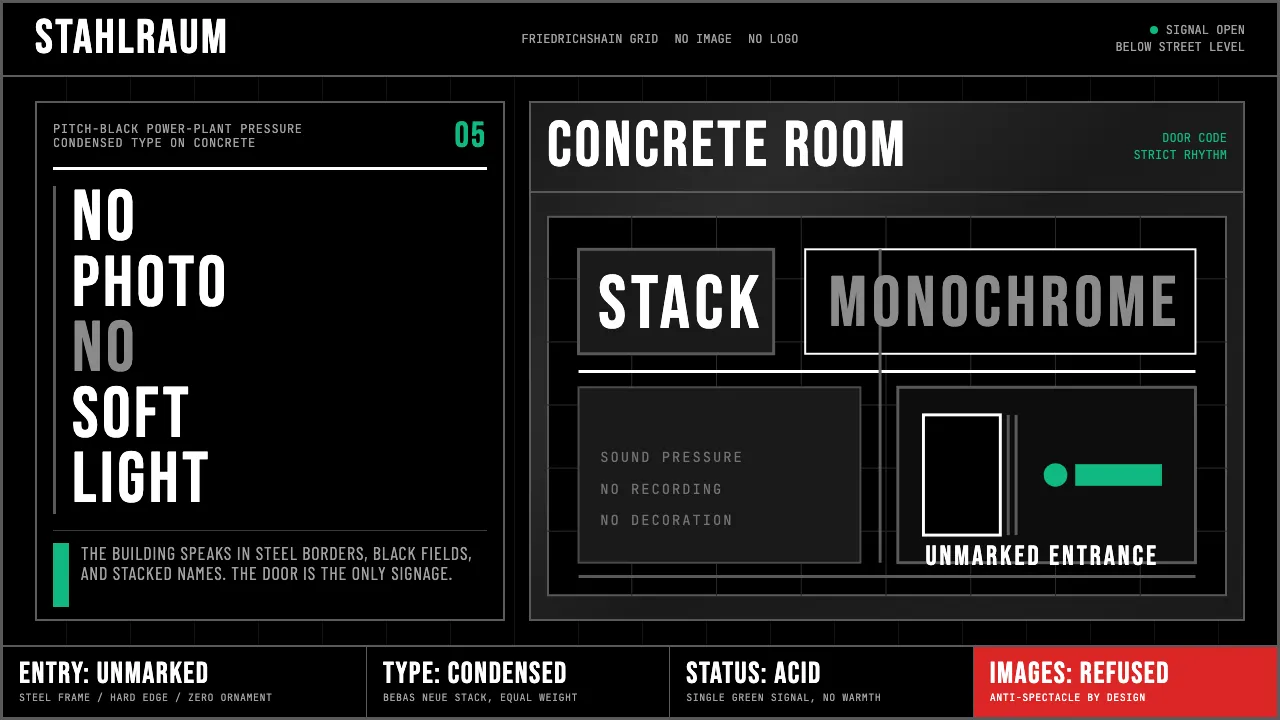
Berghain opened in 2004 inside a decommissioned power plant on the Friedrichshain–Kreuzberg border, and its visual identity became the definitive expression of Berlin techno: pitch-black interiors, no photography, no logos, condensed sans-serif type on monochrome flyers. The building is the brand; the door is the only signage.
This design system encodes that industrial austerity into digital tokens — pure black ground, brushed-steel gray surfaces, ultra-condensed Bebas Neue headlines, zero border-radius, and heavy rule lines that echo German Bahnhof signage. Color is almost absent; when it appears, it is acid green for status or emergency red for warnings.
- Origin
- Berlin, Germany (Friedrichshain-Kreuzberg)
- Era
- 2004 Berghain opens; aesthetic mature 2010s–2024
- Key figures
- Norbert Thormann · Michael Teufele · Marcel Dettmann · Ben Klock
- Movements
- Berlin techno · post-industrial dance music · anti-Instagram club culture
Berlin Techno (Berghain era) design spec
Colors
Typography
The other 11 sections — buttons, cards, spacing, motion, techniques and more — open once you unlock. Download the DESIGN.md or send it to your AI in one click. Unlock once, yours forever.
Sign up nowStyles similar to Berlin Techno (Berghain era)
Also inspired by pop culture, with a close feel.
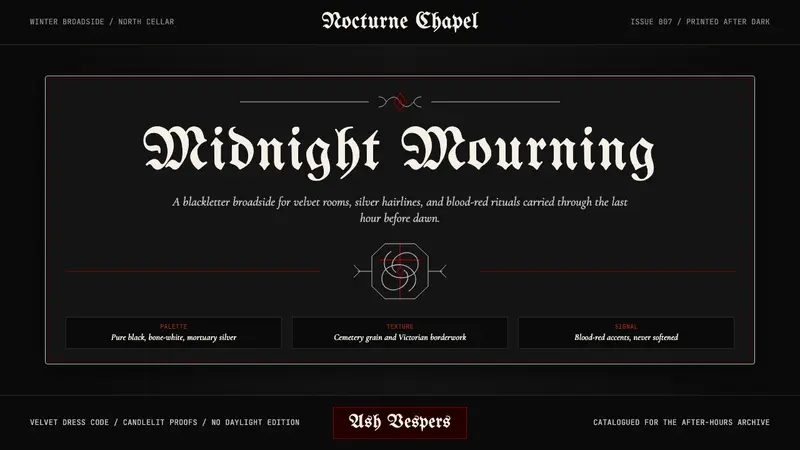 Traditional GothPost-punk in Victorian mourning. Black, blood red, bone white — Bauhaus album sleeve as interface.
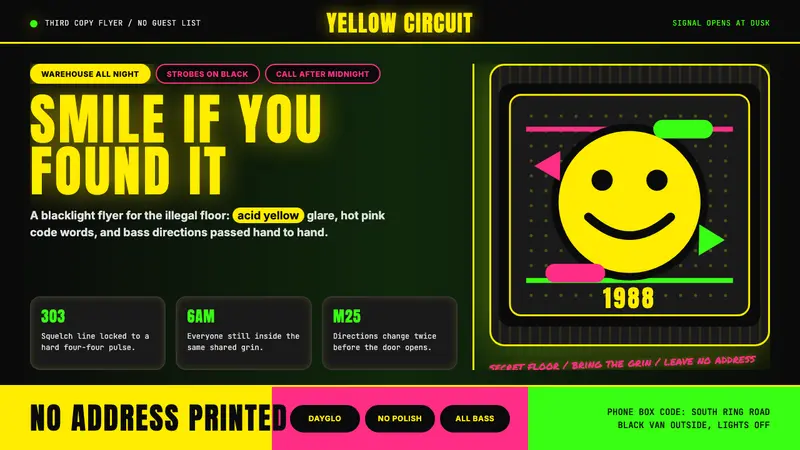 Acid House Smiley (1988)Rave energy hits first. Acid yellow on black, Anton caps, smiley glow.
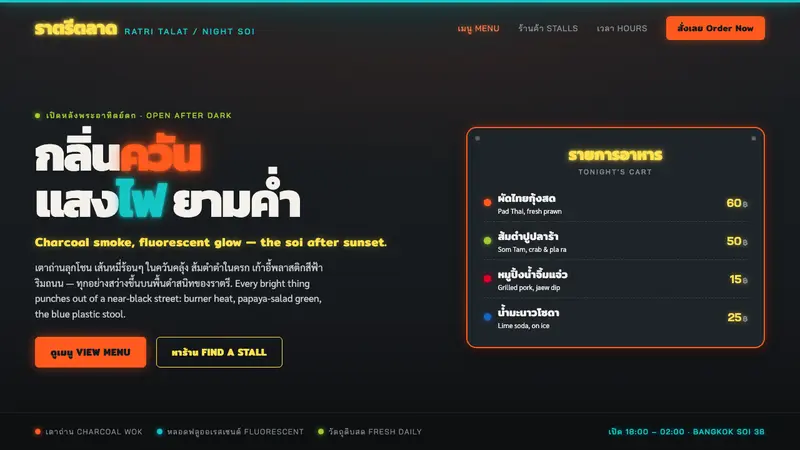 Thai Night Market Street FoodLit against the night. Chili-orange and fluorescent glow punch off a black soi, Thai script led.
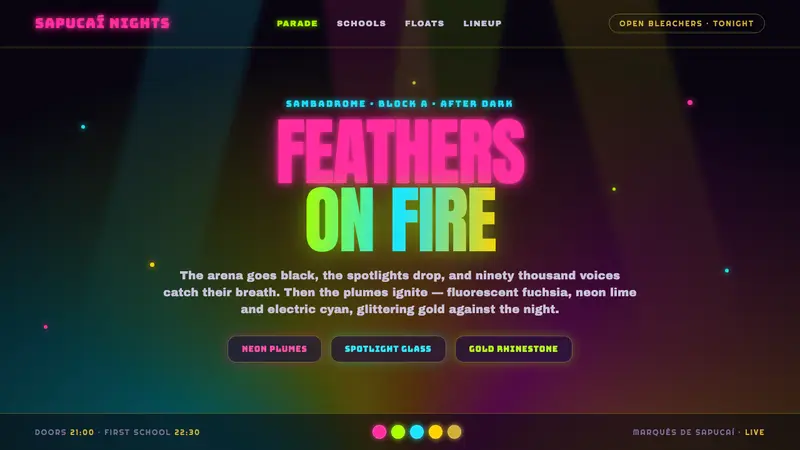 Rio Carnival Neon FeathersThe Sambadrome after dark. Fluorescent fuchsia, lime and cyan plumes glowing against night-black.