About Belarusian Slutsk Sash
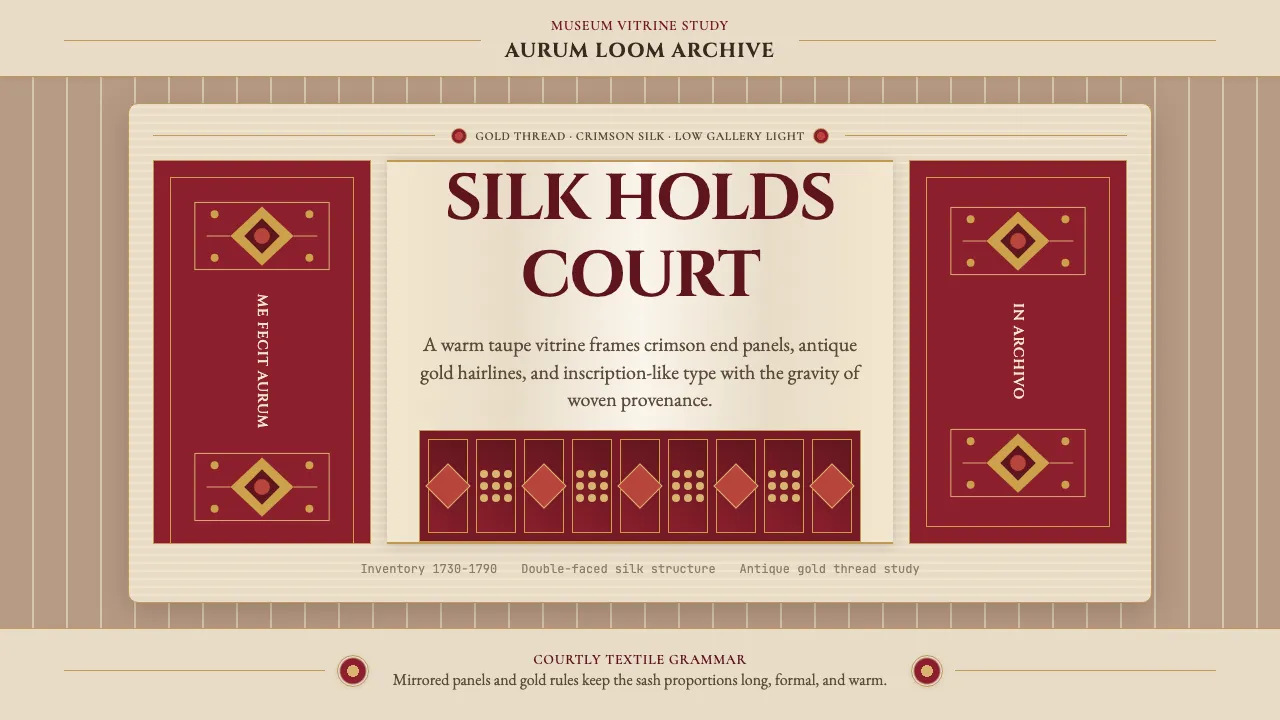
The Slutsk sash is a four-metre ribbon of gold-threaded silk that once cinched the kontusz robes of Polish-Lithuanian nobility. Woven at the Radziwiłł-funded Persiarnia manufactory from the 1730s onward, each sash bore the Latin signature of master weaver Jan Madżarski — an Armenian craftsman who fused Persian botanical motifs with European Baroque sensibility.
This design system channels the museum vitrine where the surviving sashes rest today: warm taupe ground, deep crimson end-panels, antique gold thread catching low light. Typography in Cinzel small-caps echoes the woven inscription; EB Garamond carries body text with the gravity of 18th-century Polish printing.
- Origin
- Slutsk (modern Belarus), Polish-Lithuanian Commonwealth
- Era
- 1730s–1790s (Slutsk Persiarnia manufactory)
- Key figures
- Jan Madżarski · Leon Madżarski · Michał Kazimierz Radziwiłł · Hieronim Florian Radziwiłł
- Movements
- Sarmatian noble fashion · Armenian textile diaspora craft · Slutsk Persiarnia manufactory
Belarusian Slutsk Sash design spec
Colors
Typography
The other 11 sections — buttons, cards, spacing, motion, techniques and more — open once you unlock. Download the DESIGN.md or send it to your AI in one click. Unlock once, yours forever.
Sign up nowStyles similar to Belarusian Slutsk Sash
Also inspired by crafts & folk art, with a close feel.
 Thai Temple MuralDevotional density. Vermilion panels, plaster cream, and 1.5px gold borders make a moving wall.
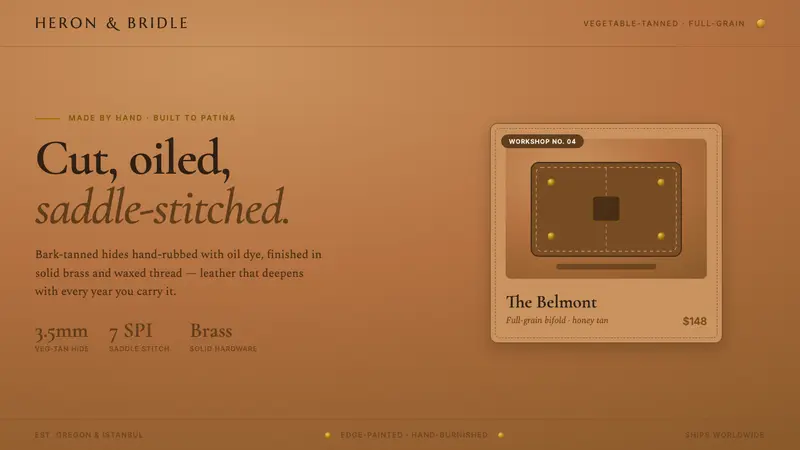 Leather Goods TanMade by hand, built to patina. Saddle-tan ground, brass rivets, dashed saddle-stitch edges.
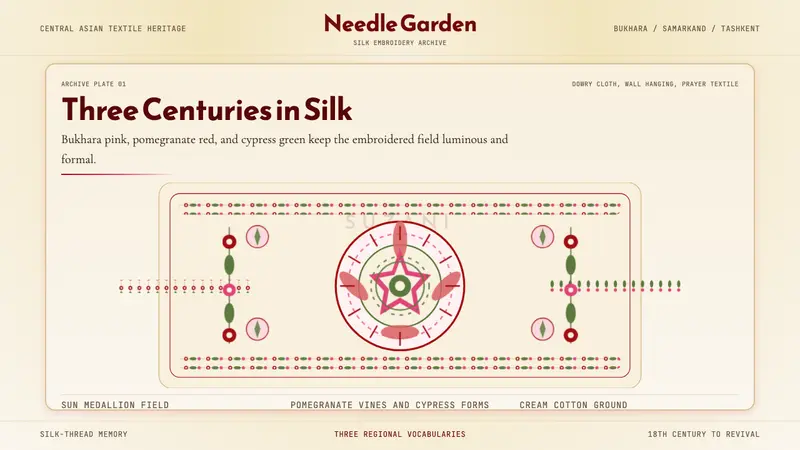 Uzbek Suzani TextileThree centuries in silk. Cream ground, pink medallions, vine borders, cypress green.
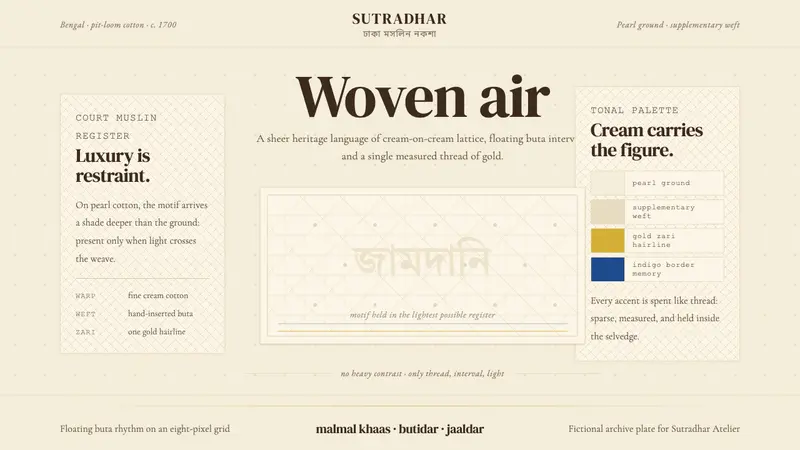 Bengali Jamdani WeavingLuxury whispers. Pearl cream, tonal buta, and one gold hairline make woven air visible.