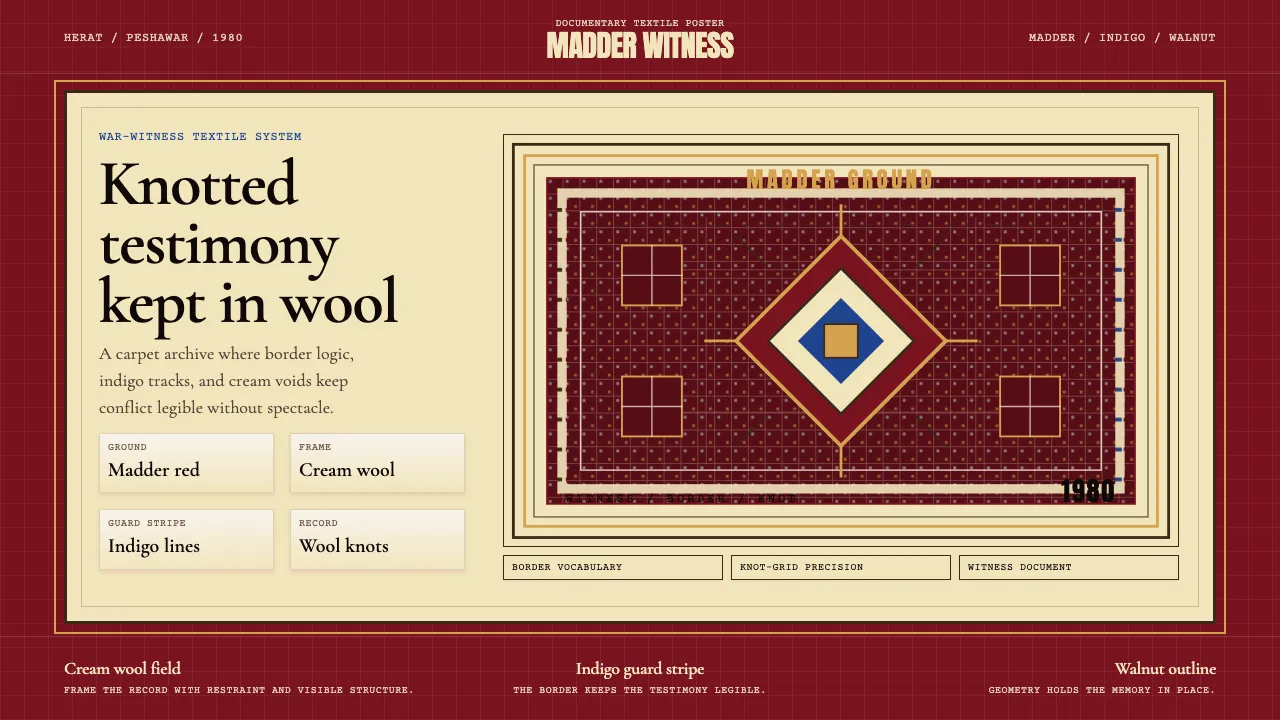
About Afghan War Rug (1980)
The Afghan war rug is a textile genre born from the Soviet invasion of 1979, where Turkmen and Baluch weavers knotted Kalashnikovs, helicopters, and tanks into traditional carpet vocabulary using natural madder-red, indigo, and walnut dyes. Each rug is a witness document — pixel-art testimony in wool.
This design system translates that knotted-wool materiality into digital form: deep madder grounds, cream content panels framed by ornamental borders, and rectilinear geometry that echoes the knot-grid precision of hand-woven carpets.
- Origin
- Afghanistan (Herat, Mazar-i-Sharif, Baluchistan) and Pakistan refugee camps
- Era
- 1979–present; peak production 1980–1992 Soviet occupation
- Key figures
- Kevin Sudeith · Enrico Mascelloni · Annemarie Sauzeau · Brian Spooner
- Movements
- Central Asian textile heritage · War-witness ethnographic art · Contemporary outsider-art / textile-art exhibition
Afghan War Rug (1980) design spec
Colors
Typography
The other 11 sections — buttons, cards, spacing, motion, techniques and more — open once you unlock. Download the DESIGN.md or send it to your AI in one click. Unlock once, yours forever.
Sign up nowStyles similar to Afghan War Rug (1980)
Also inspired by crafts & folk art, with a close feel.
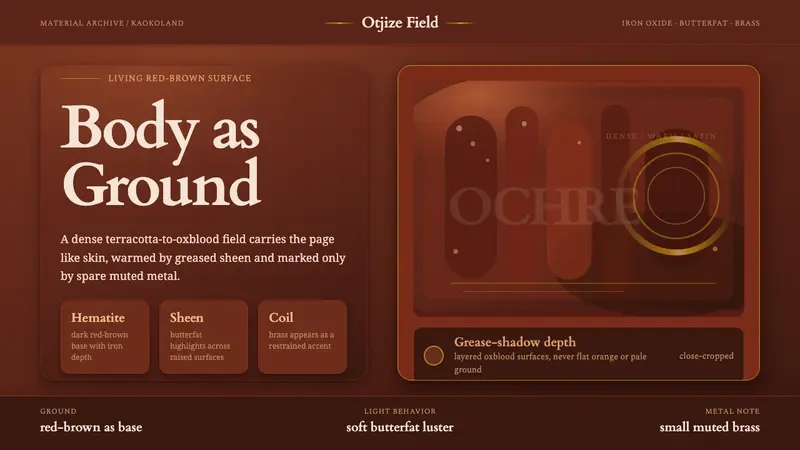 Himba Otjize Ochre NamibiaDense and ritual-warm. Oxblood ground, butterfat sheen, and sparse brass coils.
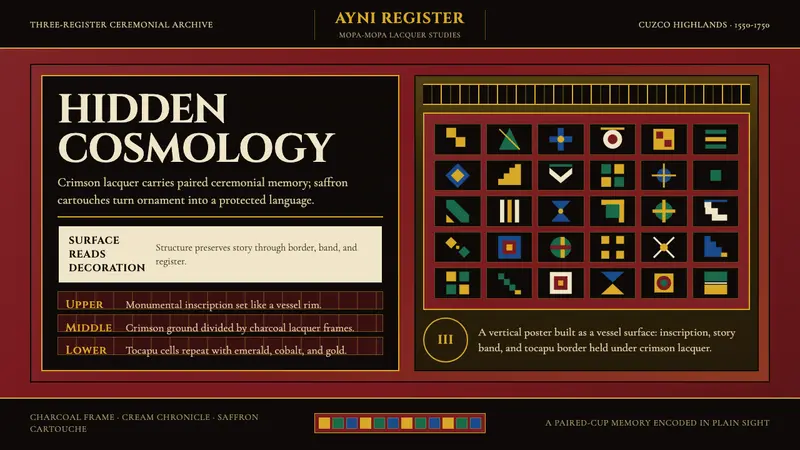 Peruvian Quechua Keros (Andean Cup)Hidden cosmology glows. Crimson lacquer and saffron tocapu grids frame the story.
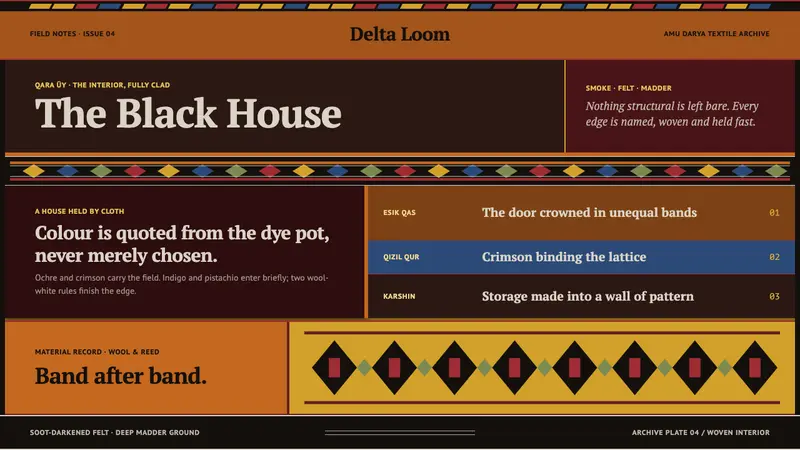 Karakalpak Yurt InteriorNo surface is left bare. Ochre, crimson and indigo bands wrap a smoke-darkened madder field.
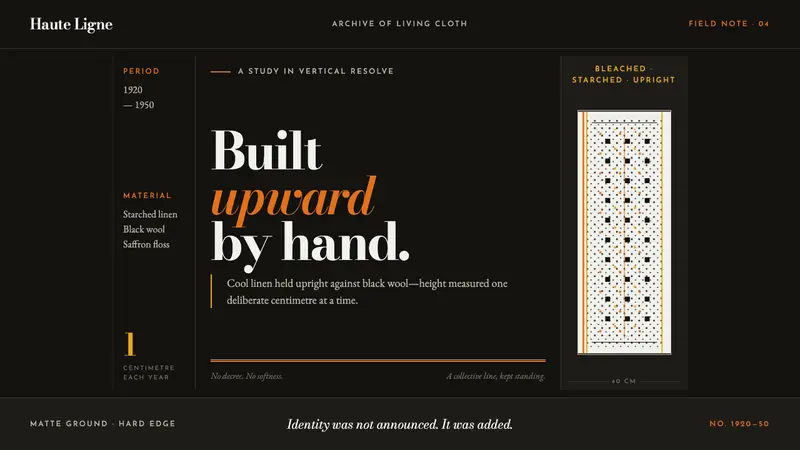 Bigouden CoiffeIdentity stands tall. Starched linen rises over matte black, edged in saffron thread.