About West African Kente Cloth
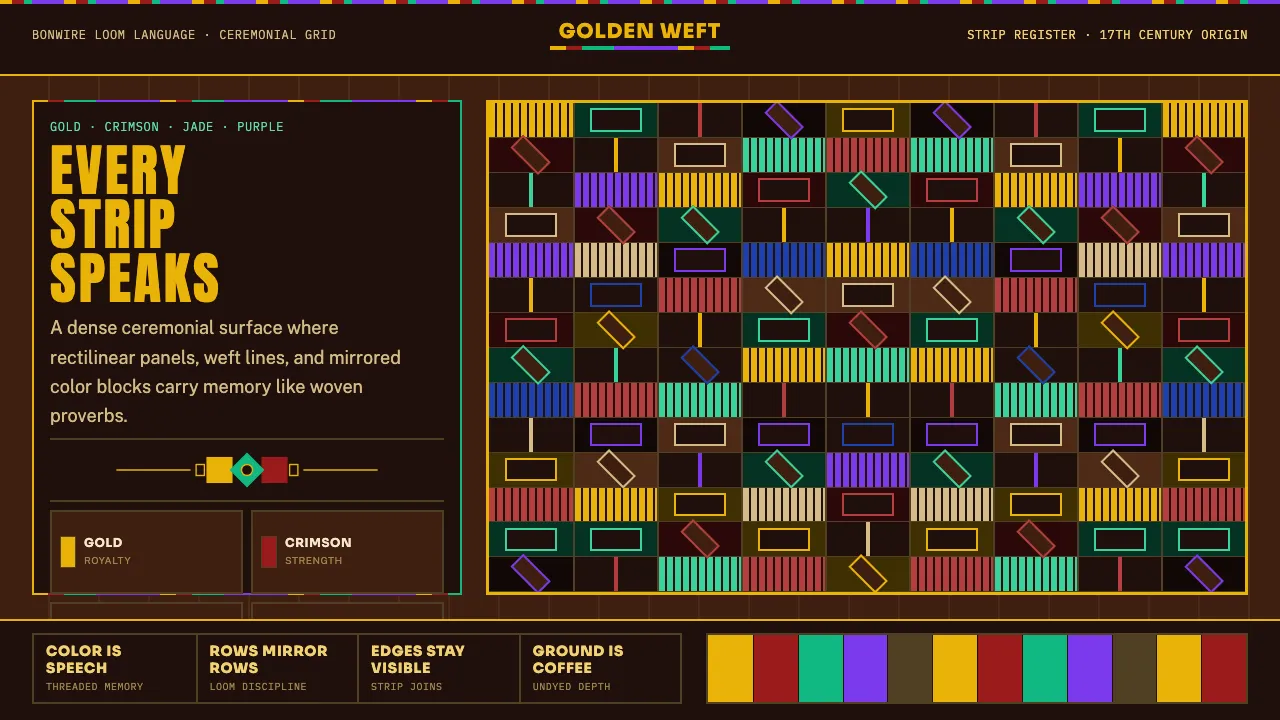
Kente cloth is the most semiotically loaded woven textile tradition in West Africa — every color is a proverb, every strip a name. Originally reserved for Asante royalty, kente's narrow loom strips lock together in mirror-symmetric repeats of gold, crimson, jade, and purple on a deep coffee-brown ground.
This design system translates kente's rectilinear geometry and royal palette into digital interfaces: vertical strip panels, weft accent lines, and Adinkra symbol ornaments replace generic cards and icons, creating surfaces that feel woven rather than rendered.
- Origin
- Asante kingdom (Bonwire, Ghana) and Ewe people of Togo
- Era
- 17th century origin; modern ceremonial peak; diaspora reinterpretation since 1960s
- Key figures
- Asantehene Osei Tutu · Bonwire master weavers · Christie Brown · Studio 189
- Movements
- Asante royal textile tradition · Adinkra symbol system · African diaspora identity revival
West African Kente Cloth design spec
Colors
Typography
The other 11 sections — buttons, cards, spacing, motion, techniques and more — open once you unlock. Download the DESIGN.md or send it to your AI in one click. Unlock once, yours forever.
Sign up nowStyles similar to West African Kente Cloth
Also inspired by crafts & folk art, with a close feel.
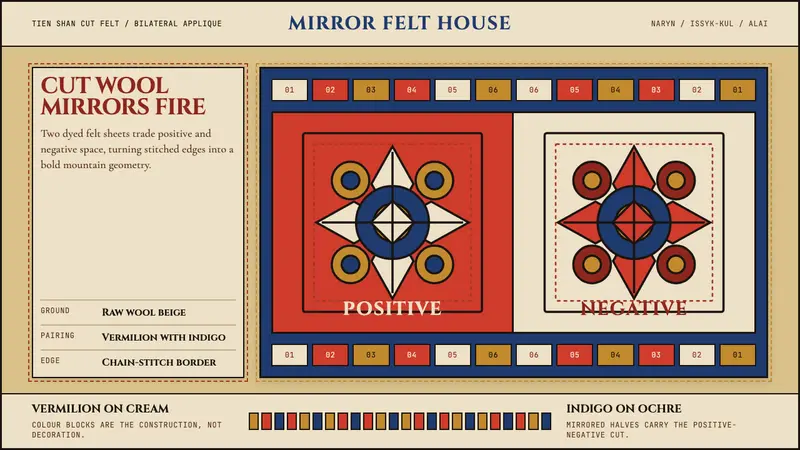 Kyrgyz Shyrdak Felt RugCut felt becomes structure. Vermilion-indigo mirror blocks stitch positive to negative.
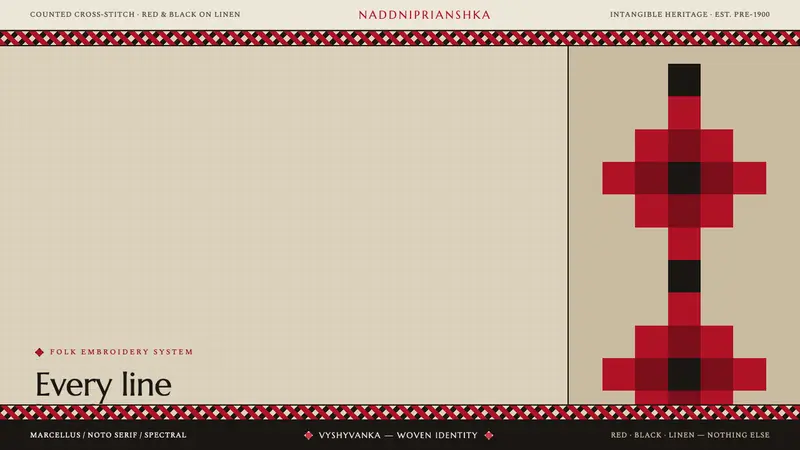 Ukrainian Vyshyvanka EmbroideryRed is life, black is protection. Stepped rhombus motifs counted thread by thread on greige linen.
 Chinese New Year Spring FestivalThe new year arrives at full volume. Lantern red glows through lacquer night and gold sparks.
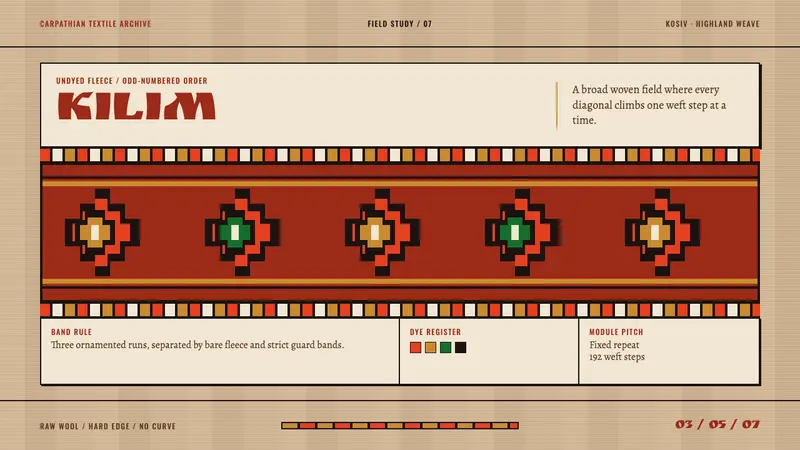 Hutsul KilimGeometry is the craft. Hot red stepped rhombs repeat across raw fleece bands.