About Tanjore Painting (Gold-leaf Tamil)
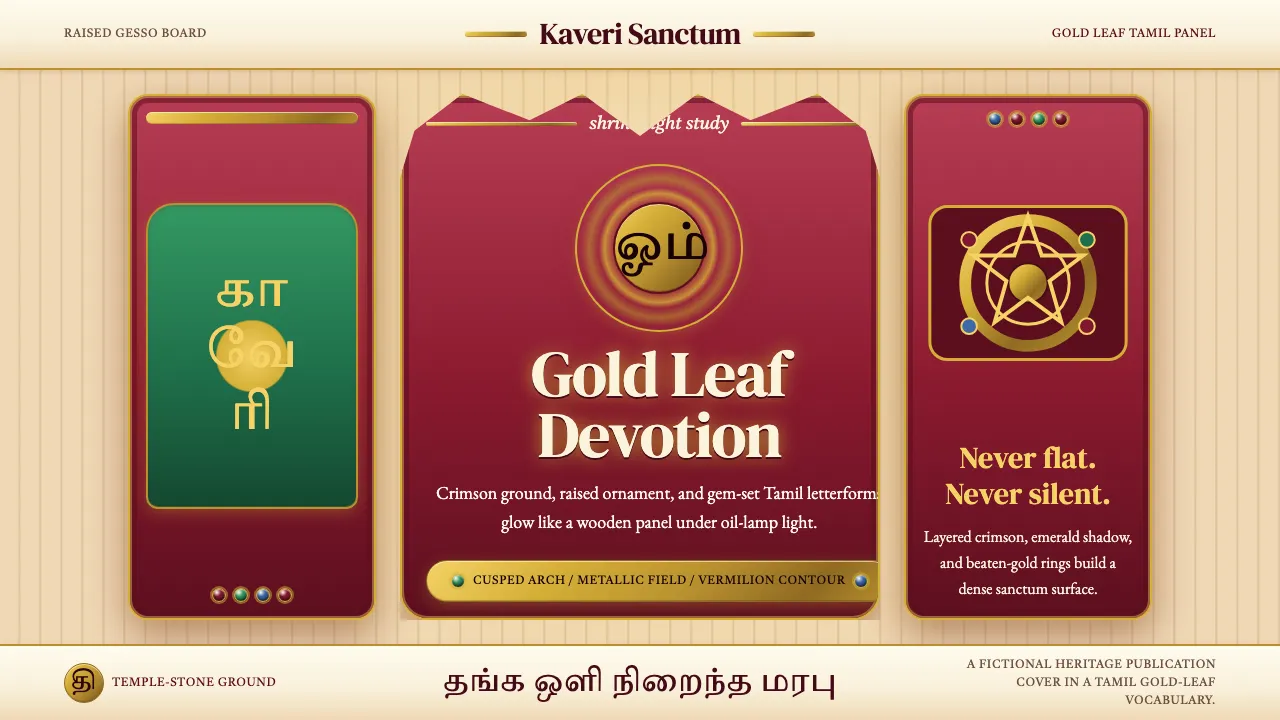
Tanjore Painting is the gold-leaf-and-gem-encrusted devotional panel tradition of Tamil Nadu — wooden boards where deities are rendered with raised gesso relief, embedded semi-precious stones, and large fields of hand-applied gold leaf. Every panel is physically three-dimensional: crowns, jewelry, and thrones protrude from the surface, catching temple oil-lamp light.
The aesthetic is opulent and reverent — deep crimson grounds, emerald accents, vermilion contour lines, and Krishna-blue flesh tones surrounding a centered deity inside a cusped multi-foil arch. Translated to the screen, it asks for saturated jewel tones, metallic gold gradients, and dense ornamental framing — never flat, never minimal, never silent.
Learn more about the Tanjore Painting (Gold-leaf Tamil) style
- Origin
- Thanjavur, Tamil Nadu, India (Kaveri delta region)
- Era
- Peak 1600s–1850s under Maratha-Nayak rulers; continuous production; GI-tag protected 2007
- Key figures
- Serfoji II of Thanjavur · S. Saravanan (Padma Shri) · Ramesh Babu · Thanjavur Brahmin painter families
- Movements
- South Indian temple devotional painting · Raised-gesso gold-leaf tradition · Late-medieval manuscript illumination
Tanjore Painting (Gold-leaf Tamil) design spec
Colors
Typography
The other 11 sections — buttons, cards, spacing, motion, techniques and more — open once you unlock. Download the DESIGN.md or send it to your AI in one click. Unlock once, yours forever.
Sign up nowStyles similar to Tanjore Painting (Gold-leaf Tamil)
Also inspired by crafts & folk art, with a close feel.
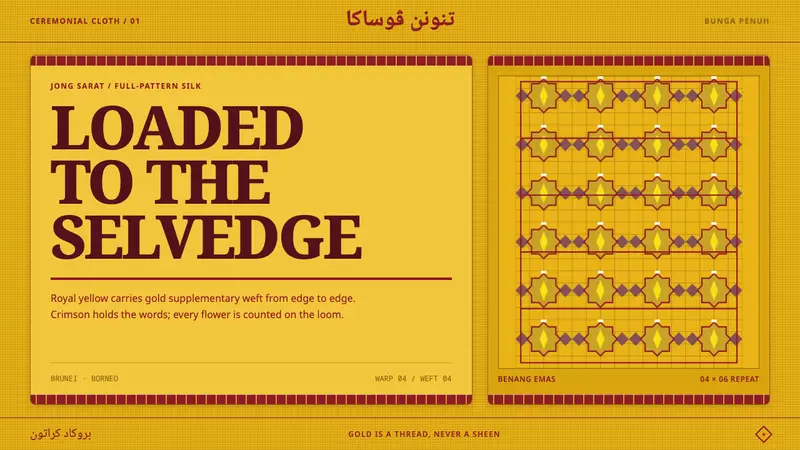 Bruneian Jong SaratNo resting ground. Royal yellow and thread-built gold pack every stepped repeat.
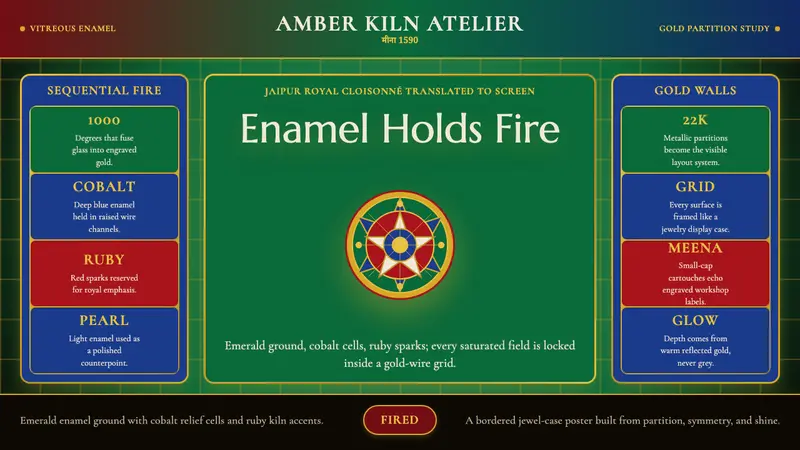 Rajasthani Meenakari EnamelJewel-box intensity. Emerald enamel, cobalt cells, ruby sparks, and gold-wire grids.
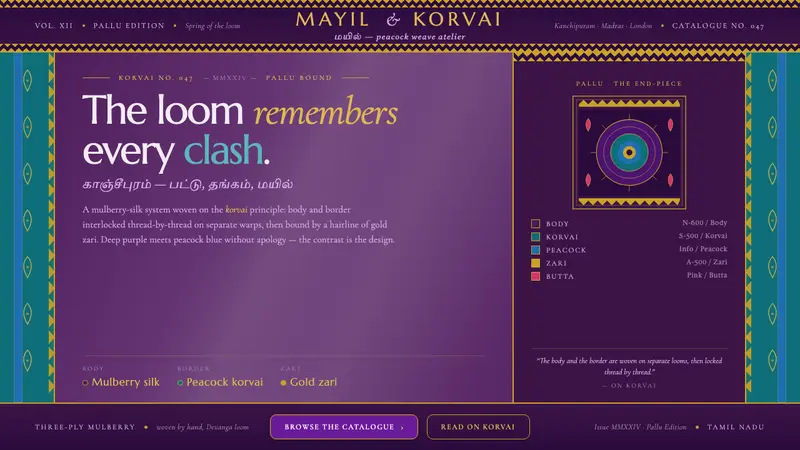 Kanchipuram Silk Saree (Temple Korvai)Refuses to blend. Mulberry purple locked against peacock-blue korvai, every edge bound by gold zari.
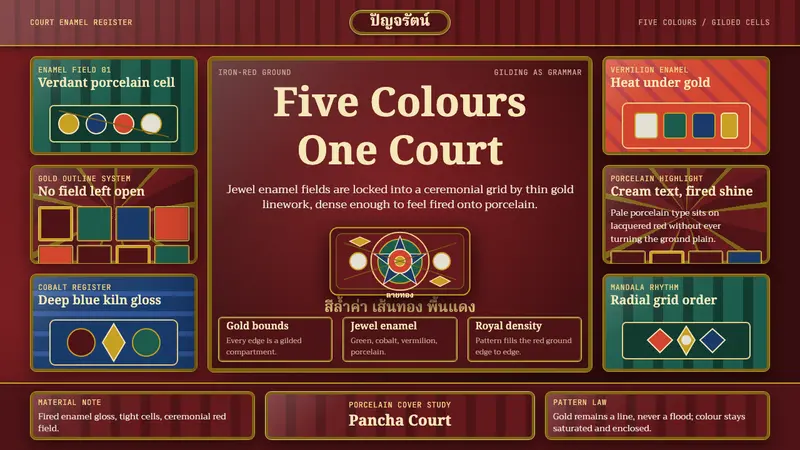 Thai BenjarongRoyal density. Gold-line enamel cells pack green, cobalt, and vermilion on iron red.