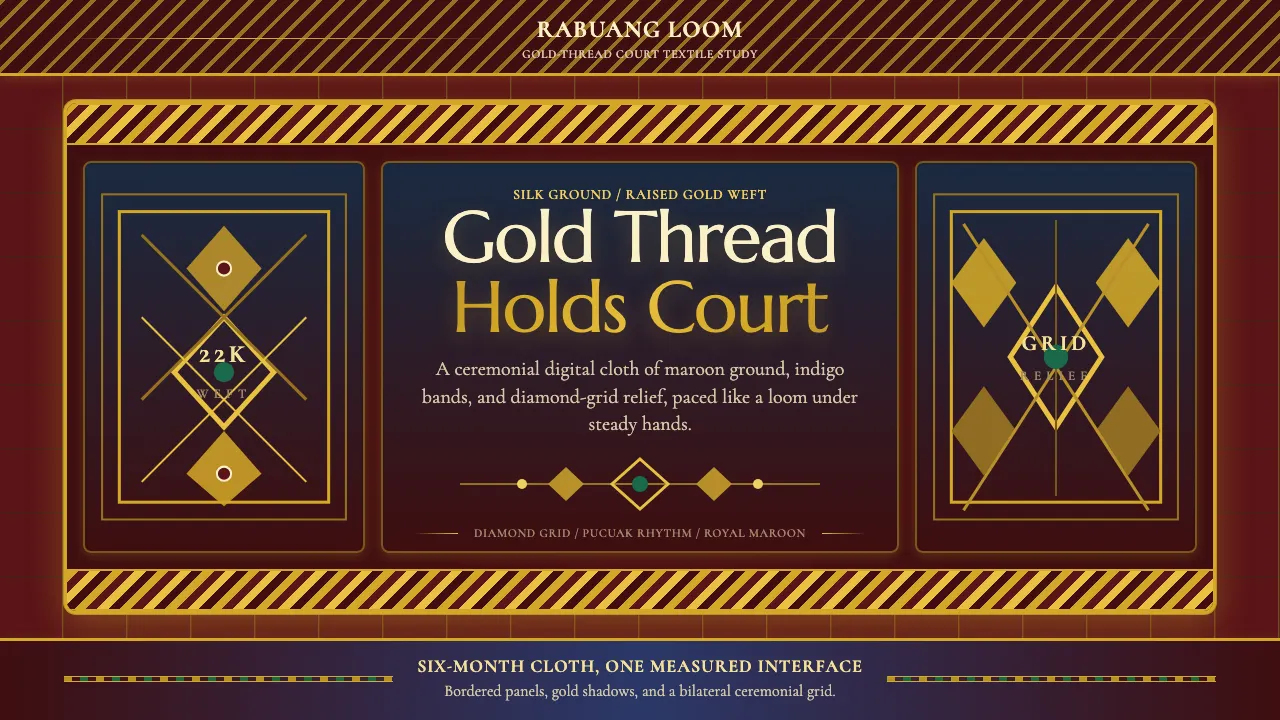
About Sumatran Songket (Pandai Sikek)
Pandai Sikek songket is the most gold-saturated woven textile in maritime Southeast Asia. Minangkabau women in the West Sumatran highlands hand-weave silk warps shot with 22-karat gold-thread supplementary wefts — buffalo horns, bamboo shoots, and royal pucuak rabuang motifs emerging in glittering relief against deep maroon silk.
This design system translates the songket loom into interface language: maroon silk grounds, gold-thread borders, diamond-grid compositions, and the diagonal pucuak-rabuang rhythm that has defined Minangkabau ceremonial cloth since the Pagaruyung court.
- Origin
- West Sumatra, Indonesia — Pandai Sikek village, Bukittinggi highlands
- Era
- 14th-century Minangkabau-court origins; peak under Pagaruyung kingdom 1500–1820; revival from 1980s
- Key figures
- Pandai Sikek master weavers · Bundo Kanduang matrilineal patrons · Bernhard Bart · Hassanah Tan
- Movements
- Minangkabau matrilineal court textile · songket / kain limar tradition · Malay courtly weaving continuum
Sumatran Songket (Pandai Sikek) design spec
Colors
Typography
The other 11 sections — buttons, cards, spacing, motion, techniques and more — open once you unlock. Download the DESIGN.md or send it to your AI in one click. Unlock once, yours forever.
Sign up nowStyles similar to Sumatran Songket (Pandai Sikek)
Also inspired by crafts & folk art, with a close feel.
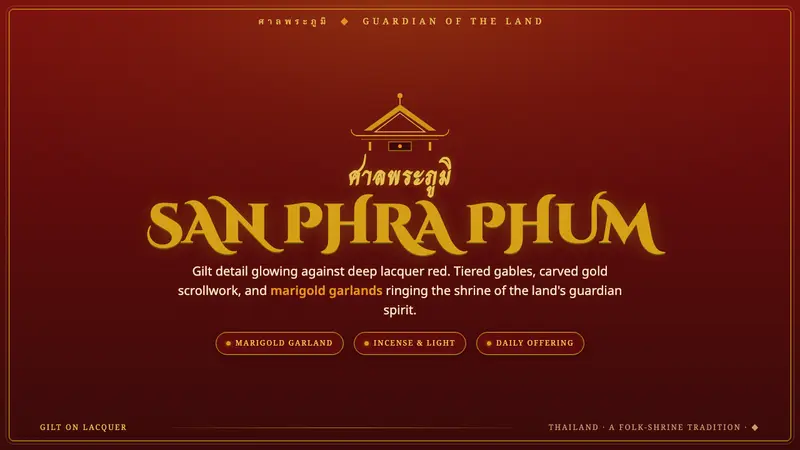 Thai Spirit House (San Phra Phum)Devotion in gilt and lacquer. Gold scrollwork and tiered gables glowing on a deep red shrine cavity.
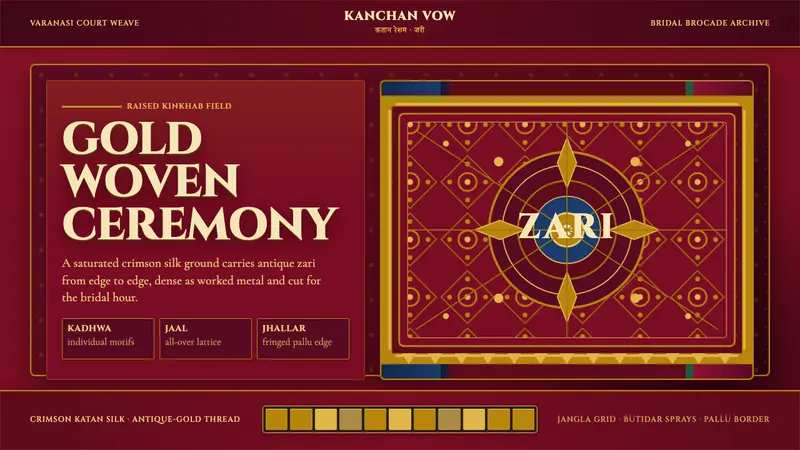 Banarasi Brocade SareeBridal maximalism, woven dense. Crimson silk grid carries raised antique-gold zari.
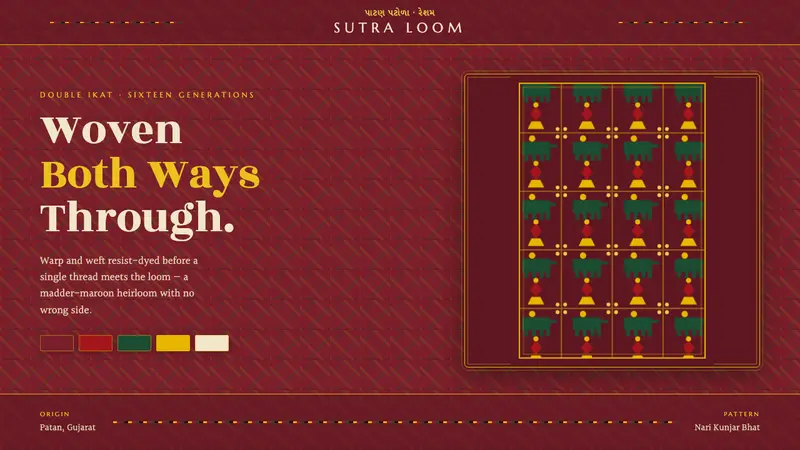 Patan Patola Double IkatReversible by design. Madder-maroon ground, a strict red-green-gold lattice, feathered ikat edges.
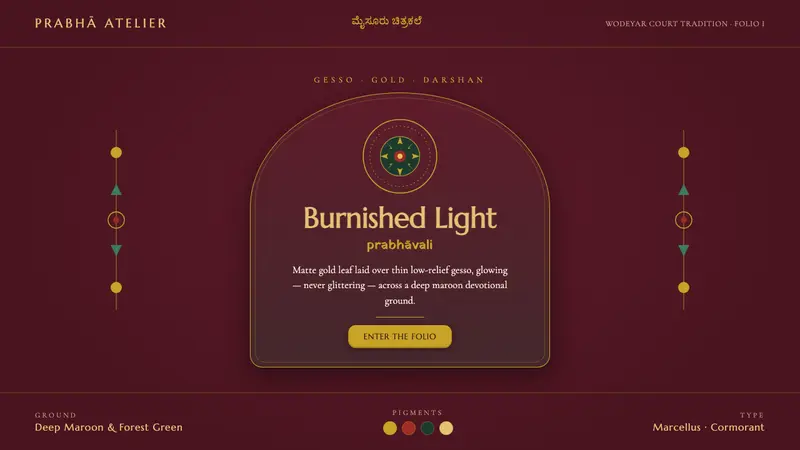 Mysore Gesso Gold PaintingGold that glows, never glitters. Matte burnished leaf over gesso on deep maroon devotional grounds.