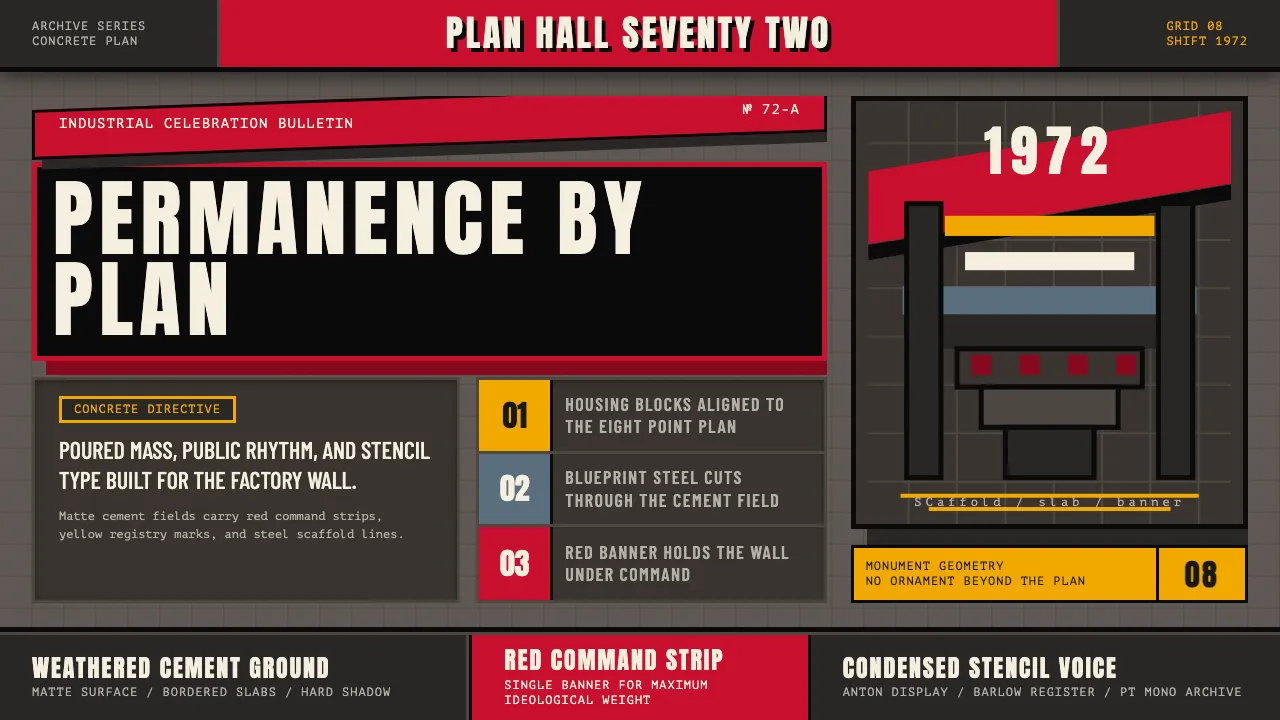
About Soviet Brutalism (1972)
Soviet Brutalism distilled an entire ideology into poured concrete and billboard-scale stencil type. Between the late 1950s and mid-1980s, architects and anonymous state poster designers forged a visual language of monumental geometry — housing micro-rayons, cascade monuments, factory mosaic murals — all proclaiming the permanence of the worker and the plan.
This design system captures the 1972 propaganda-poster moment: weathered cement gray grounds, Soviet red banner accents, condensed stencil display type, and industrial silhouettes against geometric scaffolds. It is heavy, matte, and unapologetically dense.
- Origin
- USSR — Moscow, Leningrad, Kyiv, Yerevan, Tashkent; allied Brutalism in East Germany, Yugoslavia, Czechoslovakia
- Era
- 1955–1985 (Soviet Brutalism peak); poster work 1960s–1980s
- Key figures
- Leonid Pavlov · Yevgeny Vuchetich · Jim Torosyan · Viktor Jorbenadze
- Movements
- Soviet Brutalism · Socialist Realism · Constructivism legacy
Soviet Brutalism (1972) design spec
Colors
Typography
The other 11 sections — buttons, cards, spacing, motion, techniques and more — open once you unlock. Download the DESIGN.md or send it to your AI in one click. Unlock once, yours forever.
Sign up nowStyles similar to Soviet Brutalism (1972)
Also inspired by design movements, with a close feel.
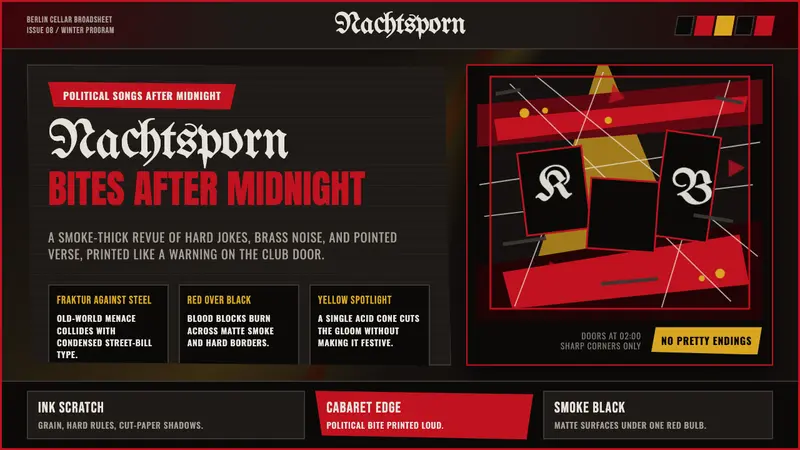 Weimar CabaretMenace at 2 a.m. Blood-red Fraktur, smoke-black grid, acid-yellow spotlight cuts.
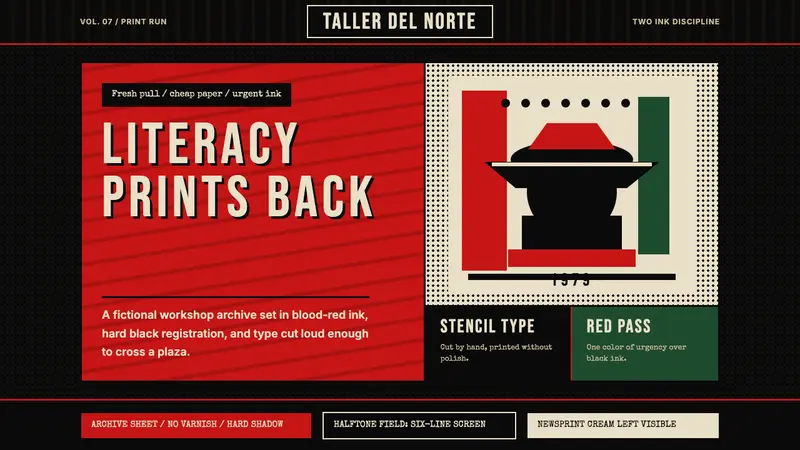 Nicaraguan Sandinista FSLN 1979Urgency in two inks. Blood red, jet black, halftone dots, and cut-stencil type.
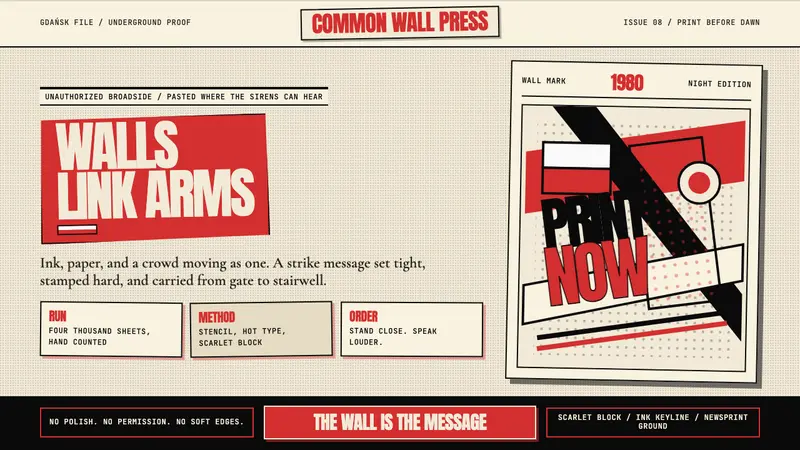 Solidarność Poland 1980Urgency becomes type. Scarlet blocks, ink keylines, and halftone cream hit like wall posters.
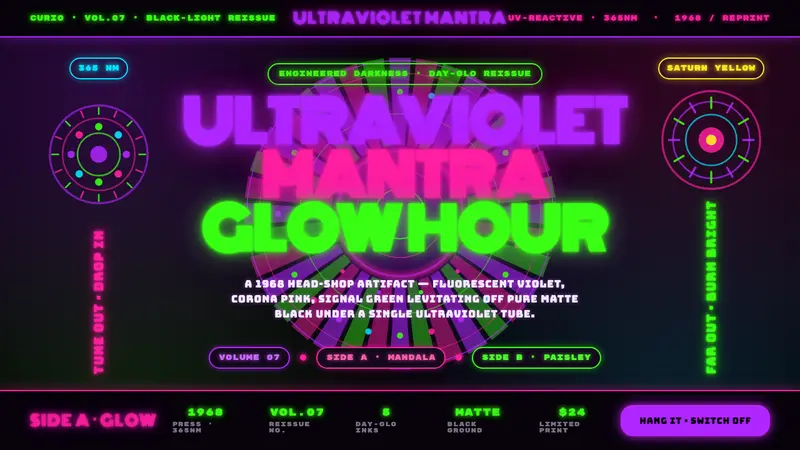 UV Blacklight PosterEngineered darkness. Day-Glo violet, Corona pink, and signal green levitating off pure matte black.