About Maasai Shuka & Beadwork
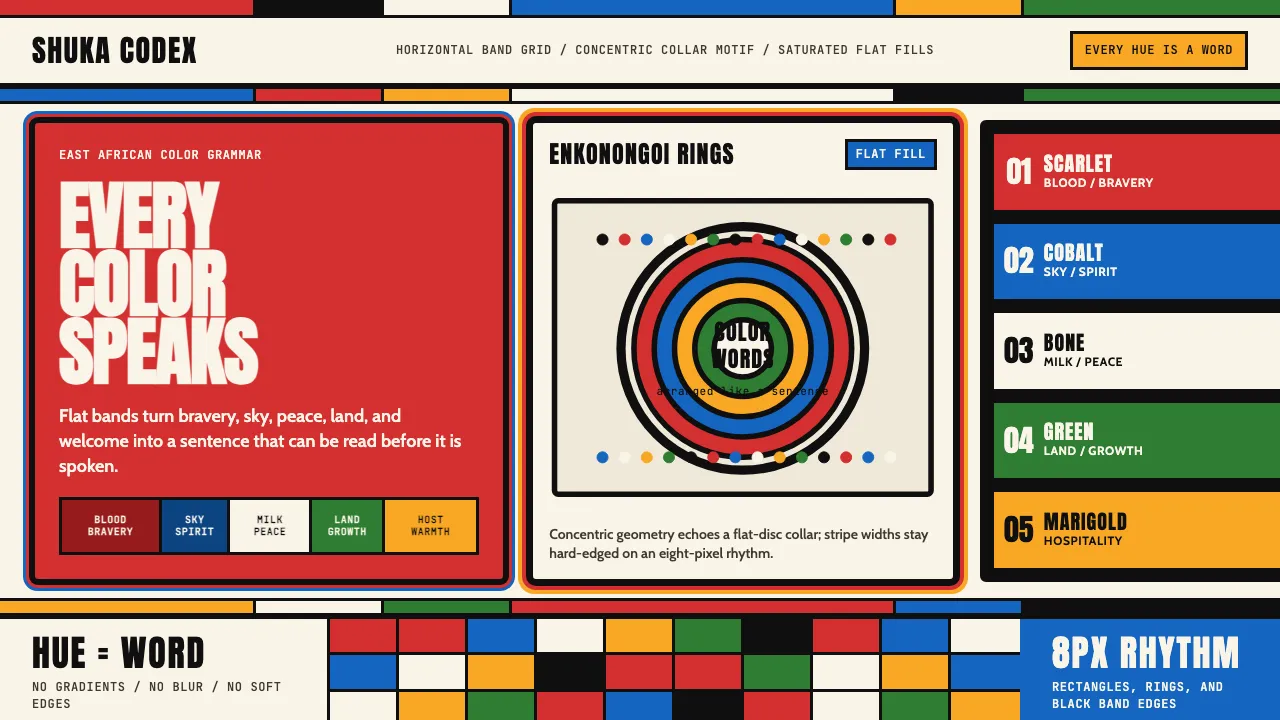
Maasai beadwork and shuka cloth form one of the world's most legible color-coded visual systems. Each hue carries fixed meaning — red for blood and bravery, blue for sky and God, white for peace and milk, green for land, yellow for hospitality — and geometric arrangements of flat-disc collars, stacked bracelets, and checkered shawls communicate age-grade, lineage, and ceremony.
This design system translates that vocabulary into digital form: hard-edged rectangular color blocks in horizontal bands, concentric ring motifs from the enkonongoi collar, and maximum-saturation flat fills with no gradients. Every color is a word; arrange them like a sentence.
- Origin
- Southern Kenya and northern Tanzania (Kajiado, Narok, Arusha, Manyara)
- Era
- Pre-colonial through present; color codification stabilized 19th–20th century
- Key figures
- Maasai women's age-set beadwork collectives · Anyango Mpinga · Pichulik
- Movements
- East African pastoral material culture · Maasai age-grade ritual visual systems · Swahili-coast bead trade networks
Maasai Shuka & Beadwork design spec
Colors
Typography
The other 11 sections — buttons, cards, spacing, motion, techniques and more — open once you unlock. Download the DESIGN.md or send it to your AI in one click. Unlock once, yours forever.
Sign up nowStyles similar to Maasai Shuka & Beadwork
Also inspired by crafts & folk art, with a close feel.
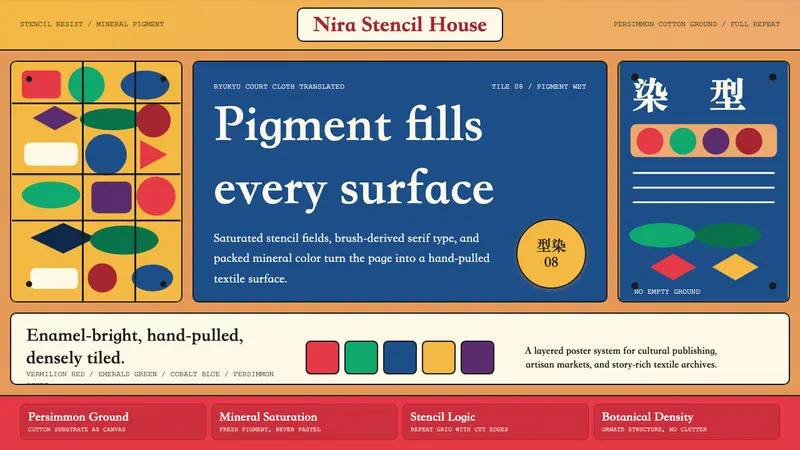 Okinawan Bingata Resist DyeOrnate without clutter. Persimmon ground, vermilion type, emerald-cobalt stencil grids.
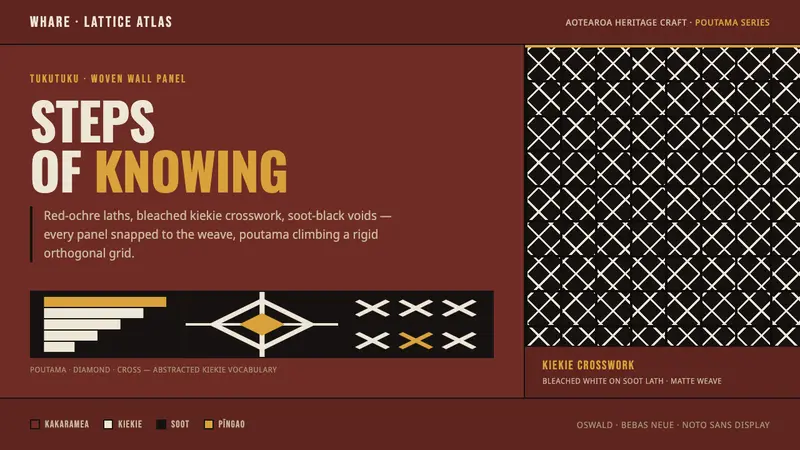 Māori Tukutuku PanelTukutuku weave, rendered strict. Bleached kiekie crosswork laces poutama steps on red-ochre lath.
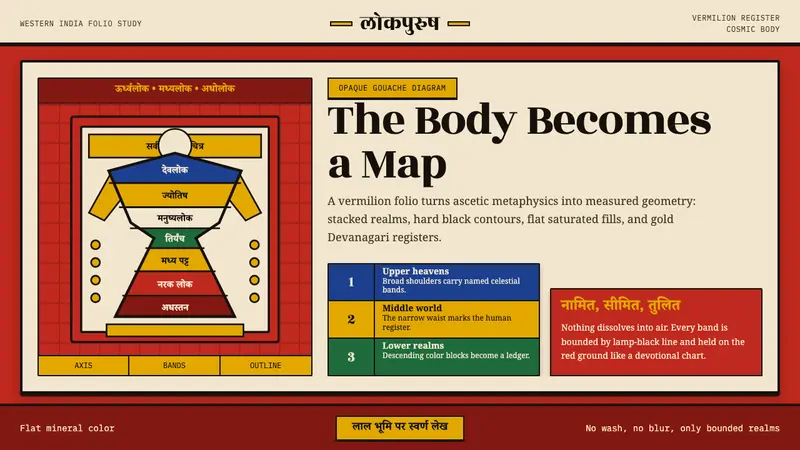 Jain CosmologyAscetic geometry, made visible. Vermilion ground, black contours, gold Devanagari bands.
 Odisha Saura Tribal MuralSacred density. Rice-white pictographs crowd a red-earth wall in ritual rhythm.