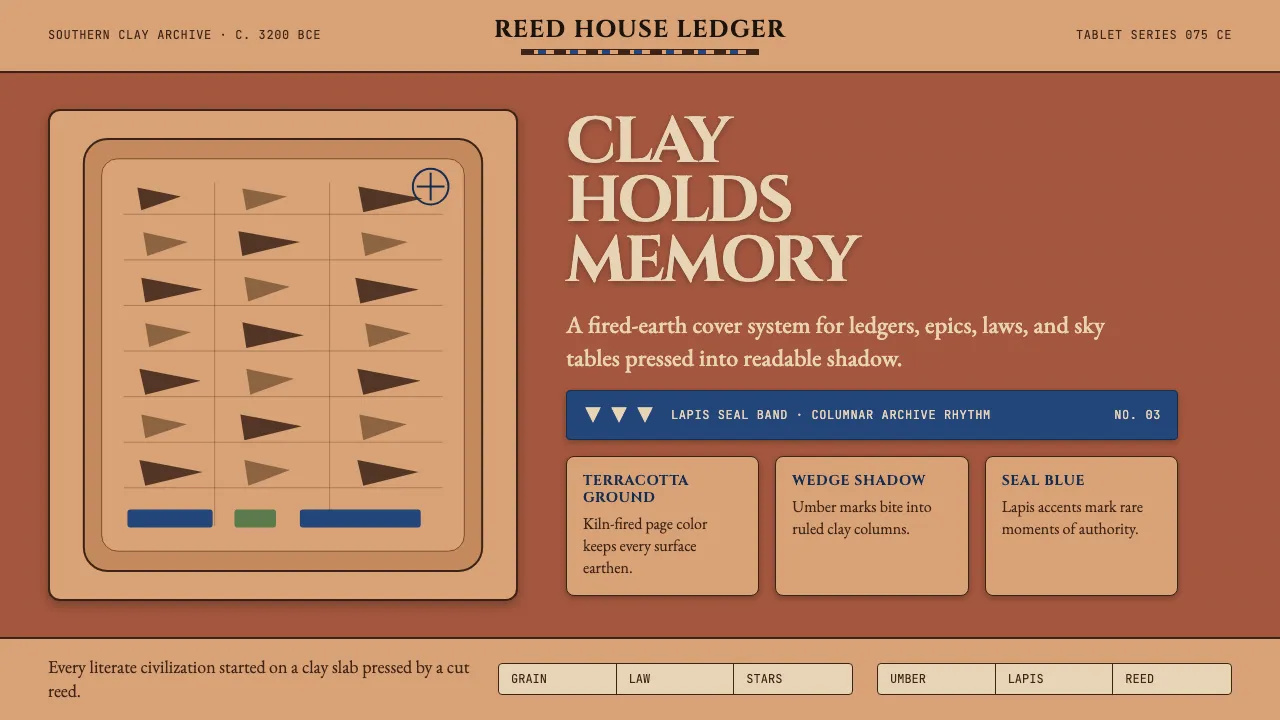
About Mesopotamian Cuneiform Tablets
Cuneiform — "wedge-shaped writing" — is the oldest legible script on Earth, pressed into wet clay with a cut reed stylus in southern Mesopotamia around 3200 BCE. For three millennia it recorded administrative ledgers, legal codes, epic poetry, and astronomical observations across a dozen languages.
This design system channels the material reality of a Nineveh archive room: fired-clay terracotta grounds, sun-baked clay card surfaces, wedge impressions catching shadow, and the rare lapis lazuli blue of cylinder-seal stones. Every surface feels like kiln-fired earth, never paper.
- Origin
- Mesopotamia — Sumer, Akkad, Babylon, Assyria (modern southern Iraq / Syria border)
- Era
- c. 3200 BCE – 75 CE
- Key figures
- Enheduanna · Hammurabi · Ashurbanipal · Henry Rawlinson
- Movements
- Sumerian pictographic-to-syllabic evolution · Old Babylonian scribal schools · Assyrian library culture
Mesopotamian Cuneiform Tablets design spec
Colors
Typography
The other 11 sections — buttons, cards, spacing, motion, techniques and more — open once you unlock. Download the DESIGN.md or send it to your AI in one click. Unlock once, yours forever.
Sign up nowStyles similar to Mesopotamian Cuneiform Tablets
Also inspired by print & type, with a close feel.
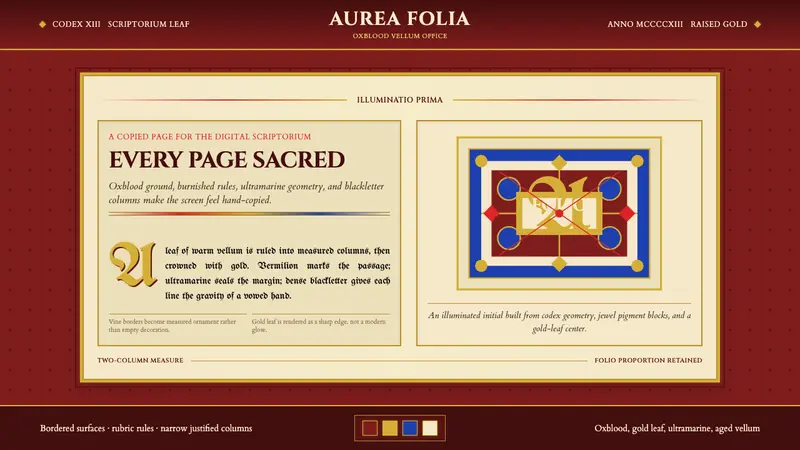 Medieval Illuminated ManuscriptTreats every page as sacred. Oxblood vellum, Cinzel capitals, gold-rule borders.
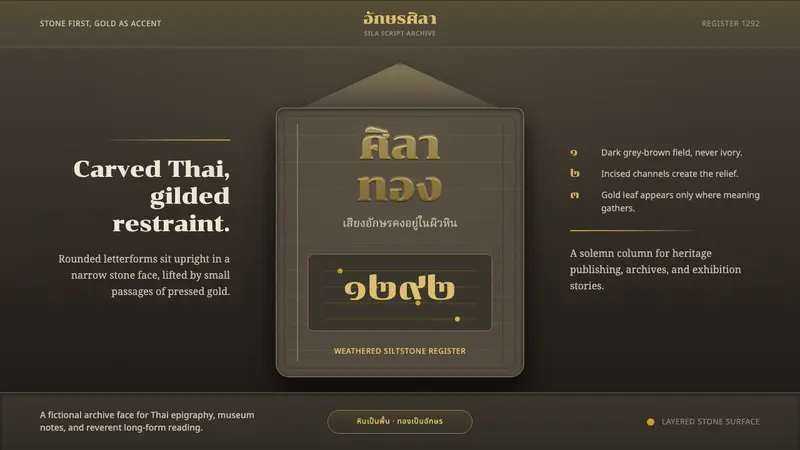 Sukhothai Thai ScriptStone carries the script. Chonburi Thai letters glint gold on dark siltstone.
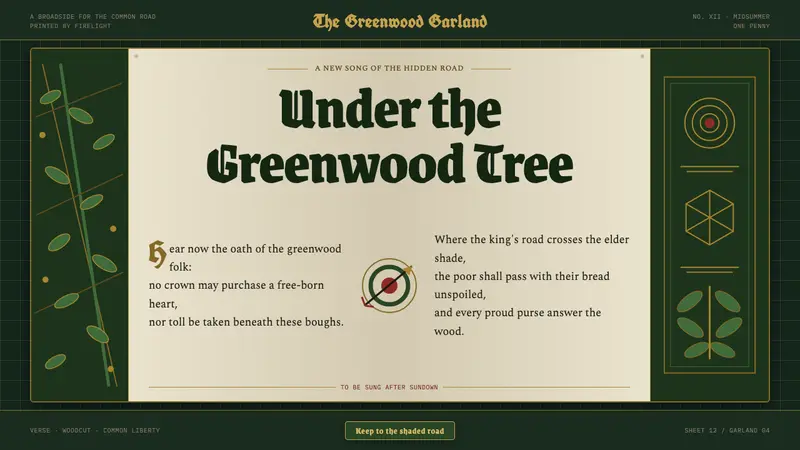 Robin Hood (Sherwood ballad)The greenwood sings in print. Black-letter, Lincoln green, and gilt borders frame the ballad.
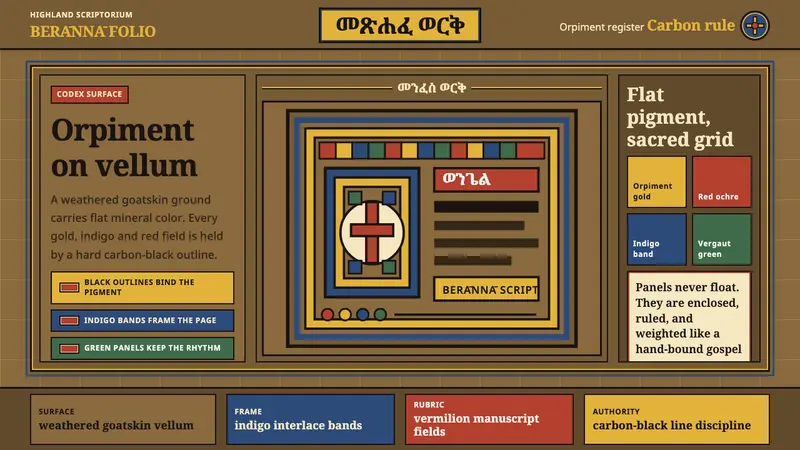 Ethiopian Ge'ez GospelSacred color held in line. Orpiment gold and indigo panels sit on weathered vellum.