About Indian Stepwell
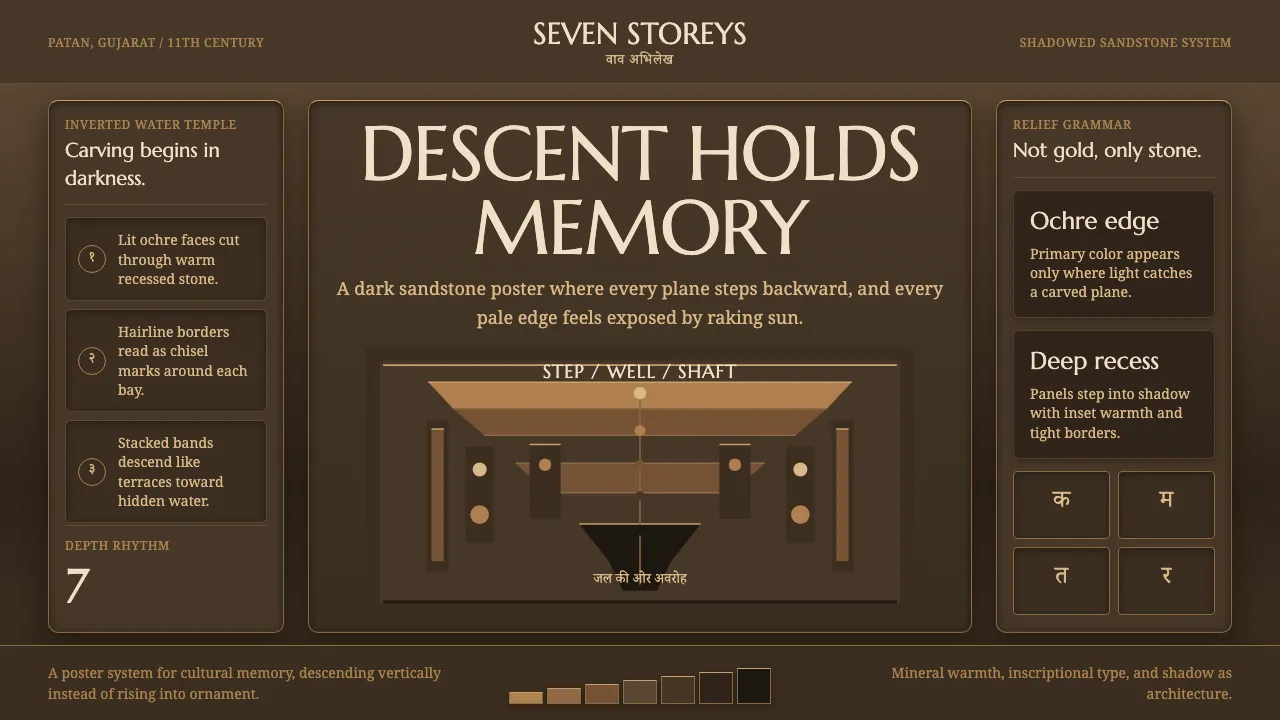
Rani-ki-Vav is an 11th-century stepwell in Patan, Gujarat — an inverted temple of water that descends seven storeys into the earth. Commissioned by Queen Udayamati in memory of her husband King Bhima I, its carved sandstone walls drop into deep geometric shadow, lined with over 500 principal sculptures of the Dashavatara, apsaras, and nagakanyas.
This design system translates that subterranean descent into interface: the ground is not lit stone but the shadowed sandstone face, vertical rhythm organises the page like stacked step-terraces, and ochre carving emerges from deep recessed dark. It is austere, weathered, and tactile — carved relief, not painted gold.
- Origin
- Patan, Gujarat, India / South Asia
- Era
- pre-1900 (11th century, Solanki / Chaulukya dynasty)
- Key figures
- Queen Udayamati · King Bhima I
- Movements
- Maru-Gurjara temple architecture · Subterranean stepwell (vav) tradition · Solanki dynasty sculpture
Indian Stepwell design spec
Colors
Typography
The other 11 sections — buttons, cards, spacing, motion, techniques and more — open once you unlock. Download the DESIGN.md or send it to your AI in one click. Unlock once, yours forever.
Sign up nowStyles similar to Indian Stepwell
Also inspired by architecture & places, with a close feel.
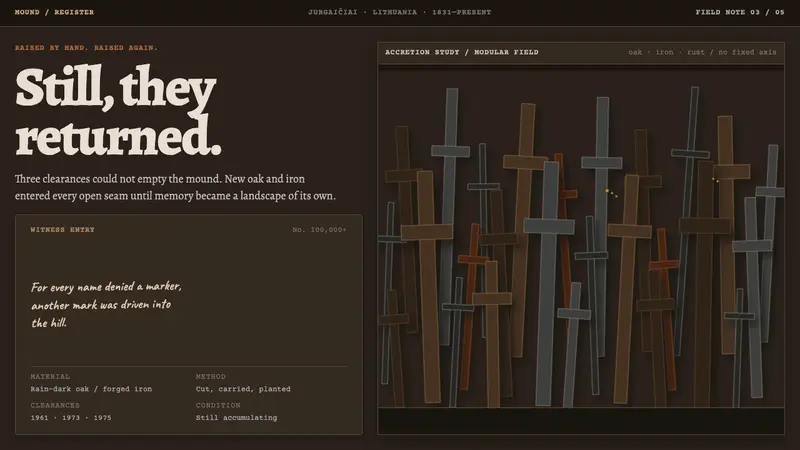 Hill of CrossesMemory returns by hand. Rain-black oak and rusted iron overlap until density becomes defiance.
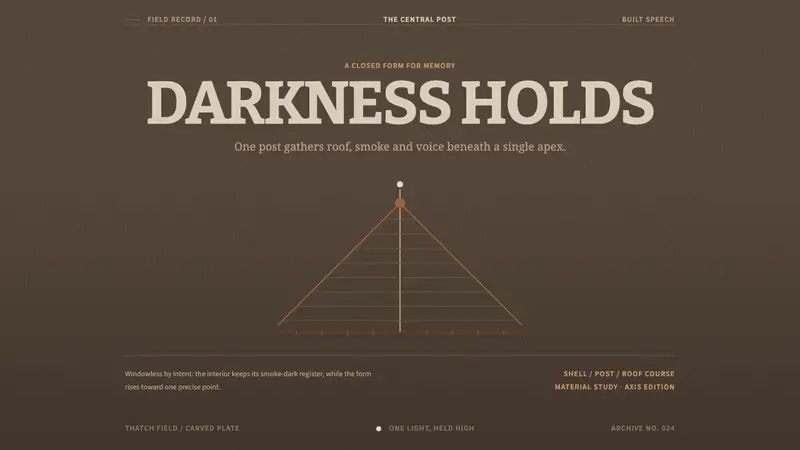 Kanak Grande CaseDarkness gives memory form. Bitter type rises on a thatch-brown central axis.
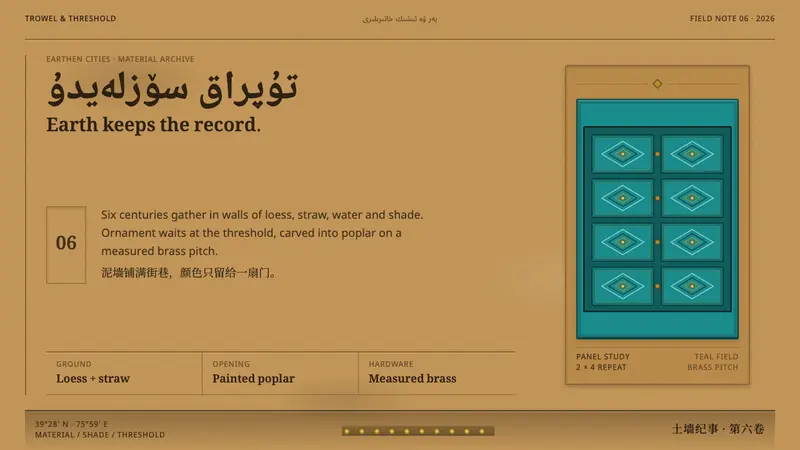 Kashgar Old TownEarth holds the field; ornament waits at one teal door, cut in a strict brass-studded grid.
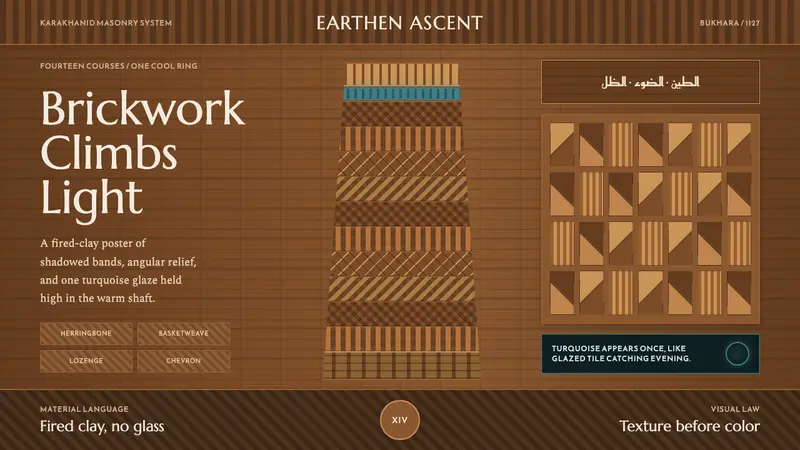 Bukhara Kalon Minaret BrickworkMonumental warmth. Ochre brick bands climb toward one turquoise ring.