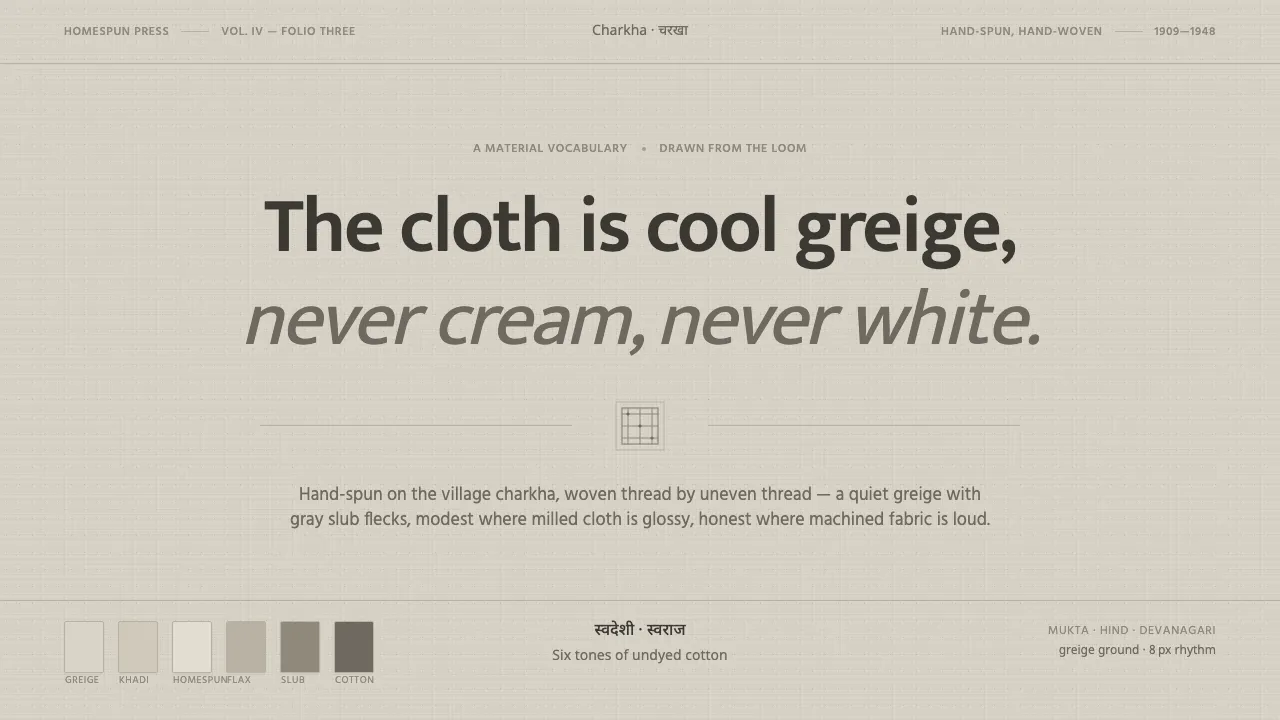
About Undyed Khadi White
Undyed khadi is the hand-spun, hand-woven cotton that Gandhi made the emblem of swadeshi self-reliance, turned on the charkha spinning wheel in village India between 1900 and 1950. In its raw state it is a cool natural greige — between dove grey and oatmeal — flecked with gray cotton slubs.
This system distills that cloth into an interface: a quiet greige ground, muted flax and slub neutrals, plain humanist sans type, and the honest, irregular texture of a handmade weave. Modest, not luxurious; homespun, not machined.
- Origin
- South Asia (India)
- Era
- 1900–1950 (Indian independence / swadeshi movement)
- Key figures
- Mahatma Gandhi · village hand-spinners · charkha weavers
- Movements
- Swadeshi · Indian independence movement · hand-spun homespun textile revival
Undyed Khadi White design spec
Colors
Typography
The other 11 sections — buttons, cards, spacing, motion, techniques and more — open once you unlock. Download the DESIGN.md or send it to your AI in one click. Unlock once, yours forever.
Sign up nowStyles similar to Undyed Khadi White
Also inspired by crafts & folk art, with a close feel.
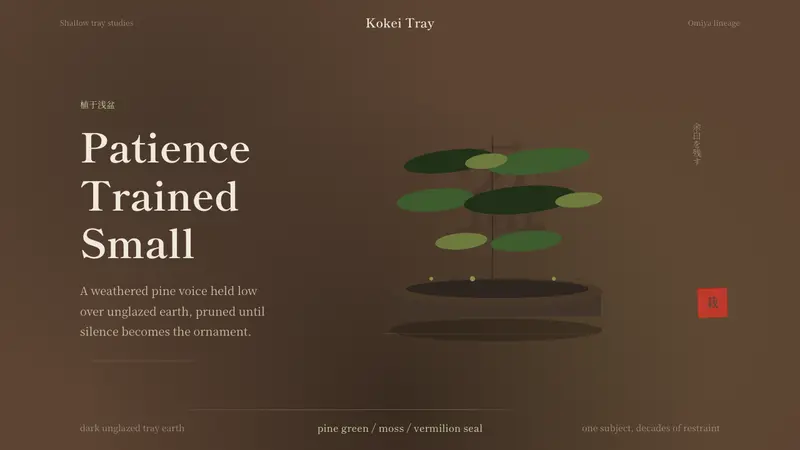 Bonsai CultivationQuiet asymmetry. Pine green rests on dark tray earth, sealed by one vermilion mark.
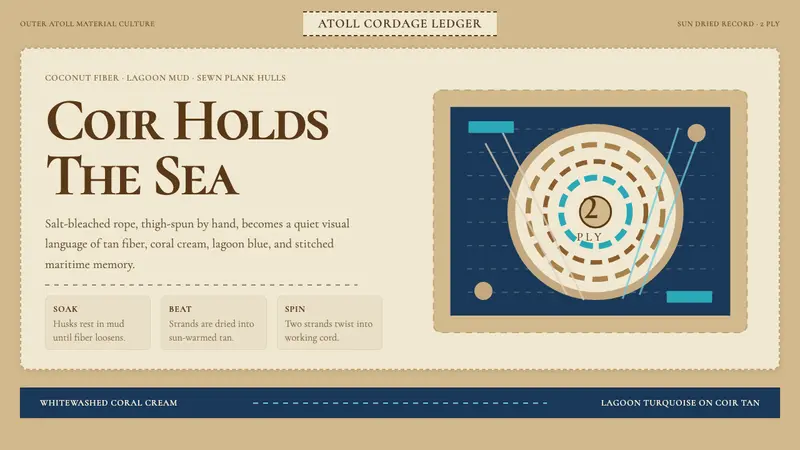 Maldivian Coir (Coconut Rope)Ocean-tested craft. Coir tan, coral cream, Cormorant type, and dashed seam geometry.
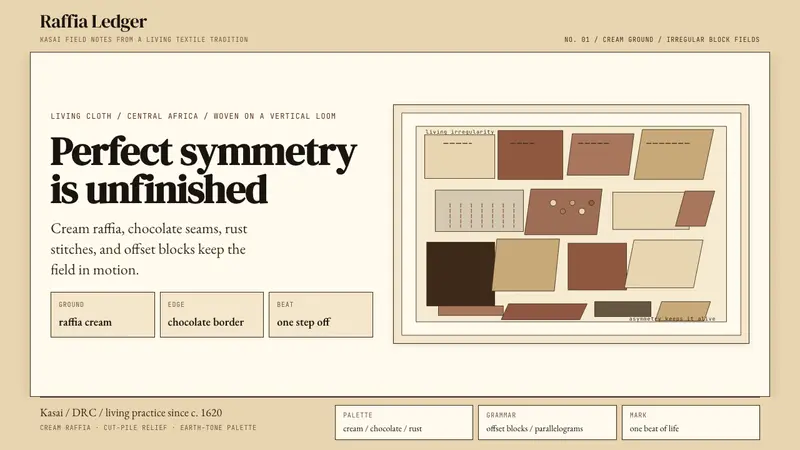 Kuba Raffia Cloth (Congo)Deliberate asymmetry lives. Cream raffia, chocolate seams, and rust blocks.
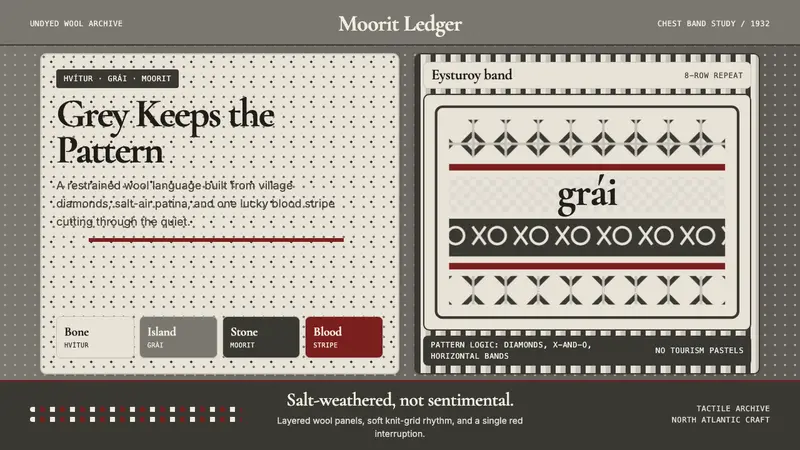 Faroese Knit Pattern Island GreyWeathered wool, not cozy kitsch. Island greys, Cormorant serif, one blood-red stripe.