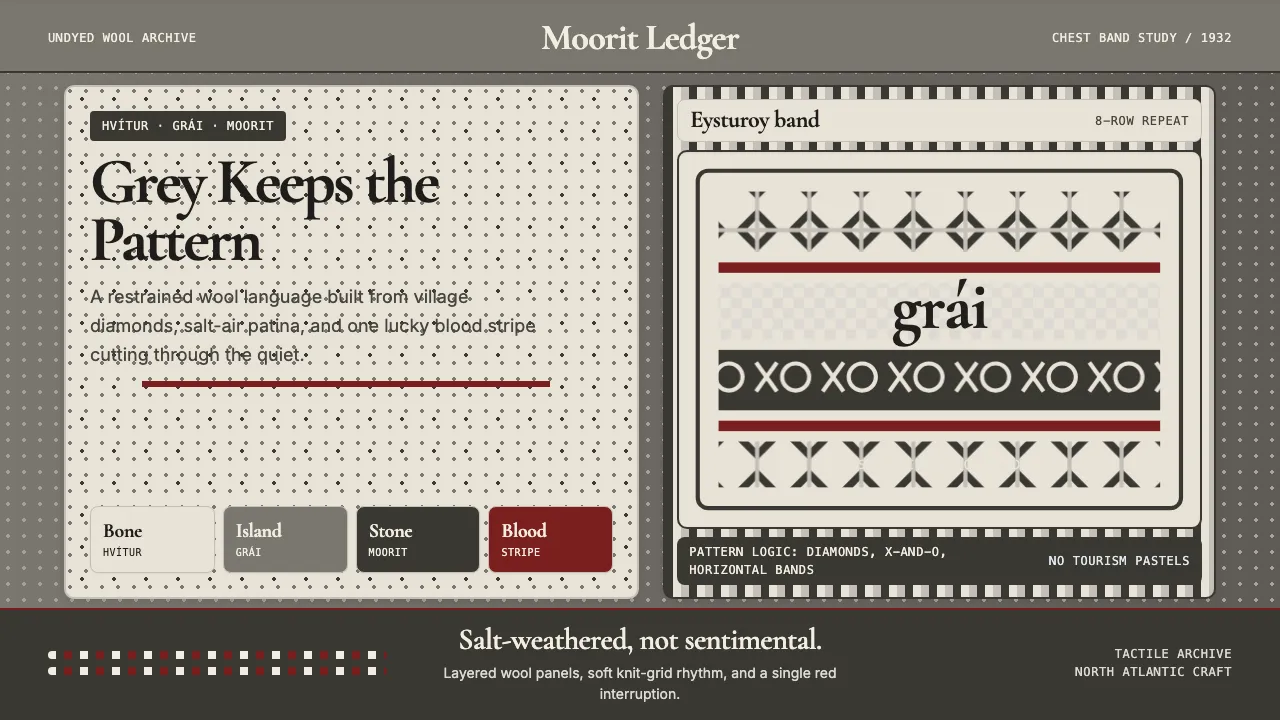
About Faroese Knit Pattern Island Grey
Born from the undyed fleece of small Faroese sheep, this design system channels the island grey-on-grey palette of stranded-knit sweaters codified in Hans Marius Debes Joensen's 1932 pattern book. Horizontal band compositions echo chest-strip layouts, while a single blood-stripe red punctuates the weathered wool tones.
The visual language draws from village-named motifs — Eysturoy diamonds, Sandoy X-and-O repeats — rendered through wool-fiber texture and salt-air patina. It is restrained, tactile, and rooted in North Atlantic craft rather than Scandinavian tourism aesthetics.
- Origin
- Faroe Islands (Tórshavn, Vágar, Eysturoy, Sandoy, Suðuroy)
- Era
- 18th-century cottage knitting; 1932 pattern codification; contemporary revival 1998–present
- Key figures
- Hans Marius Debes Joensen · Guðrun Rógvadóttir · Guðrun Ludvig · Annika í Dáli
- Movements
- Faroese cottage knit tradition · Føroya Heimavirki guild · Nordic-noir international revival
Faroese Knit Pattern Island Grey design spec
Colors
Typography
The other 11 sections — buttons, cards, spacing, motion, techniques and more — open once you unlock. Download the DESIGN.md or send it to your AI in one click. Unlock once, yours forever.
Sign up nowStyles similar to Faroese Knit Pattern Island Grey
Also inspired by crafts & folk art, with a close feel.
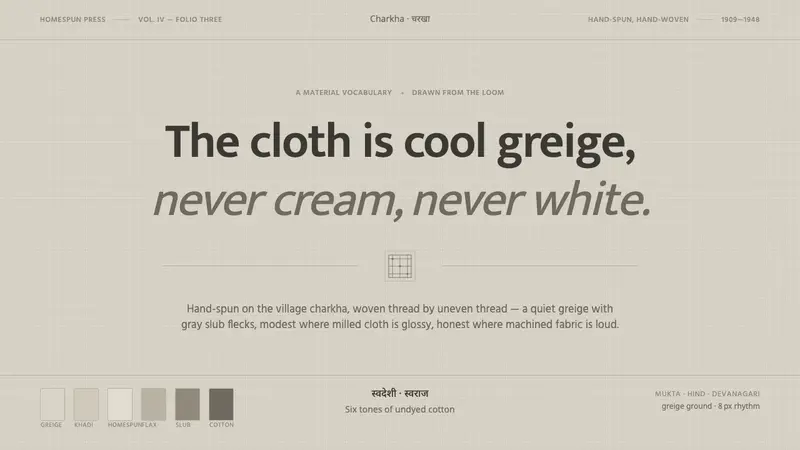 Undyed Khadi WhiteModest, never cream. Greige homespun cotton with gray slub flecks and plain humanist sans.
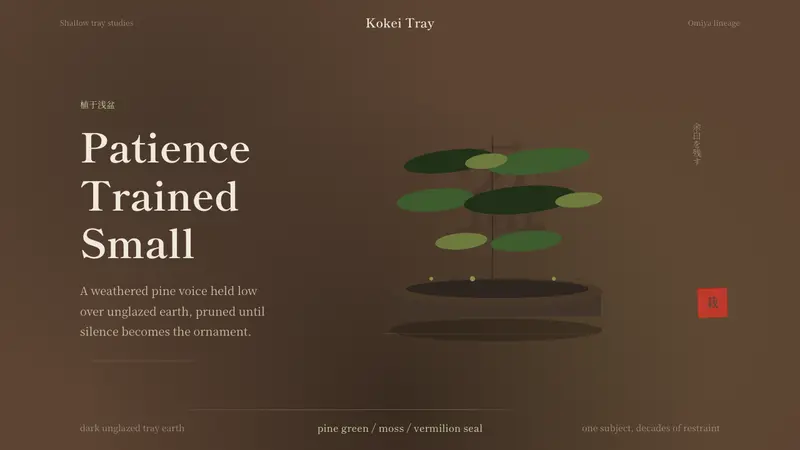 Bonsai CultivationQuiet asymmetry. Pine green rests on dark tray earth, sealed by one vermilion mark.
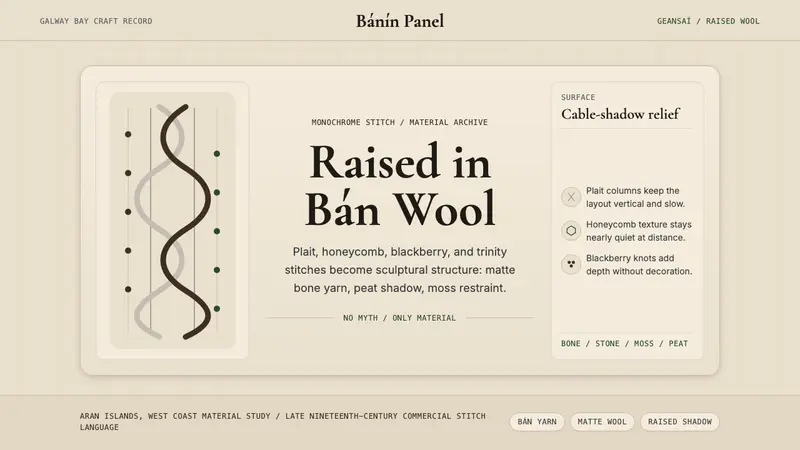 Irish Aran Island Cable KnitMaterial honesty raised in wool. Bone ground, moss ink, and cable columns cast quiet shadow.
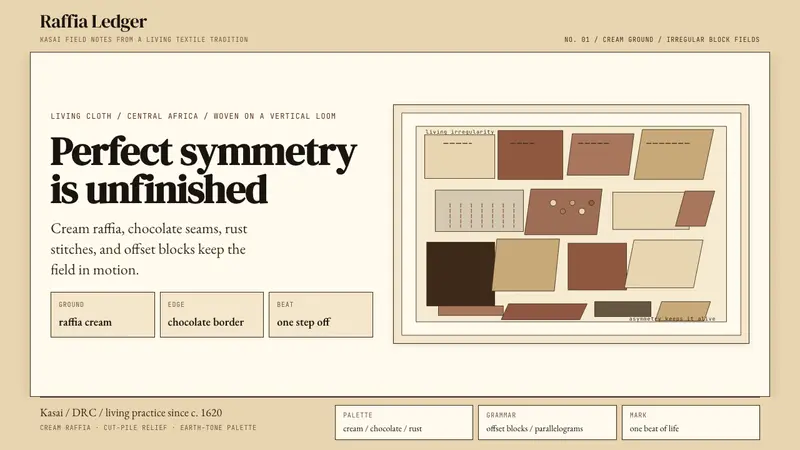 Kuba Raffia Cloth (Congo)Deliberate asymmetry lives. Cream raffia, chocolate seams, and rust blocks.