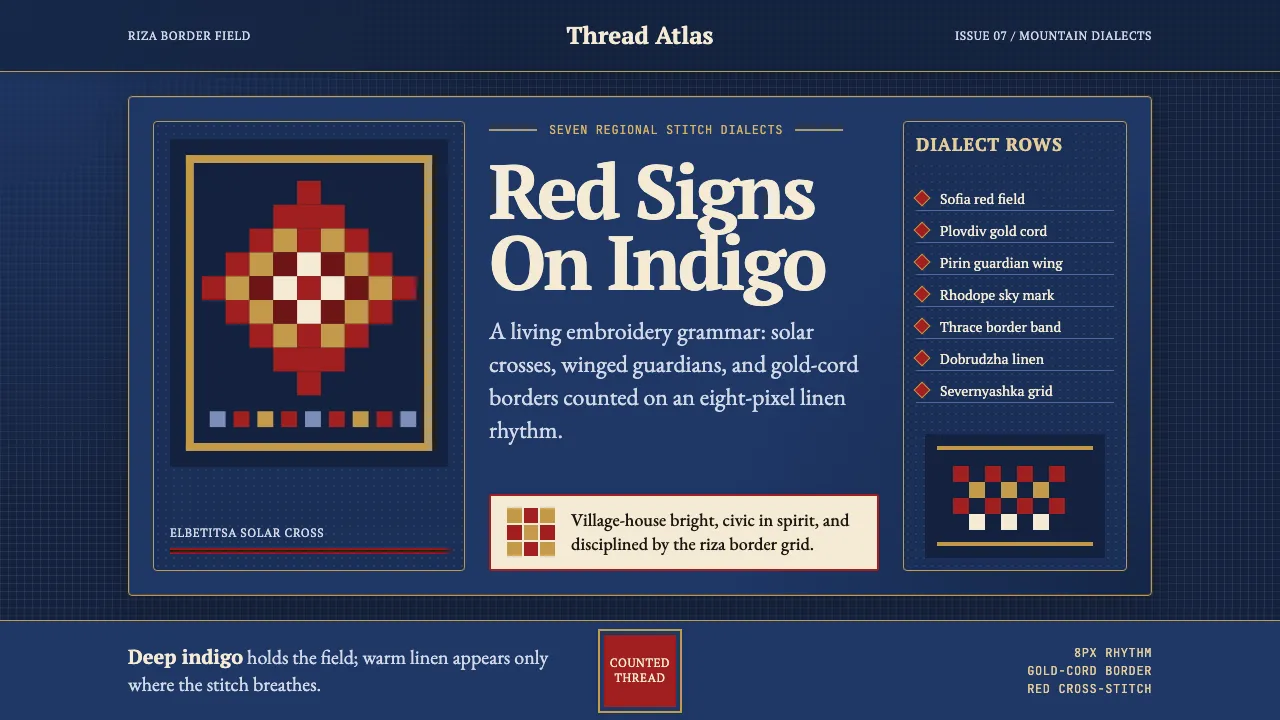
About Bulgarian Shevitsa Folk Embroidery
Shevitsa — literally "stitching" — is Bulgaria's regional embroidery sign-language. Stitched onto white-linen shirts and aprons in seven canonical dialects, each motif carries pre-Christian meaning: the *elbetitsa* solar cross, the *kanatitsa* winged guardian, the *bogovitsa* sky-mother. This design system renders that vocabulary in pixels: deep indigo fields (the protective riza border), shevitsa-red cross-stitch surfaces, and gold-cord accent lines.
The aesthetic is village-house bright, not museum-dim. Cards sit like embroidered panels on indigo linen; section dividers repeat elbetitsa cross-rows; typography respects Cyrillic letterforms with PT Serif and EB Garamond. Every element speaks the same dialect — dense, geometric, hand-stitched, deeply coded.
Learn more about the Bulgarian Shevitsa Folk Embroidery style
- Origin
- Bulgaria — seven regional embroidery dialects (Sofia, Plovdiv, Pirin, Rhodope, Thrace, Dobrudzha, Severnyashka)
- Era
- medieval origin; peak 18th–19th c.; revived post-2013 (Shevitsa-as-Flag civic art)
- Key figures
- Maria Vesselinova · Elena Pavlova · Anna Velkova · Plovdiv Ethnographic Museum staff
- Movements
- Bulgarian Revival folk-art (Vazrazhdane) · Pre-Christian solar-sign survival · Post-2013 Shevitsa-as-Flag civic protest art
Bulgarian Shevitsa Folk Embroidery design spec
Colors
Typography
The other 11 sections — buttons, cards, spacing, motion, techniques and more — open once you unlock. Download the DESIGN.md or send it to your AI in one click. Unlock once, yours forever.
Sign up nowStyles similar to Bulgarian Shevitsa Folk Embroidery
Also inspired by crafts & folk art, with a close feel.
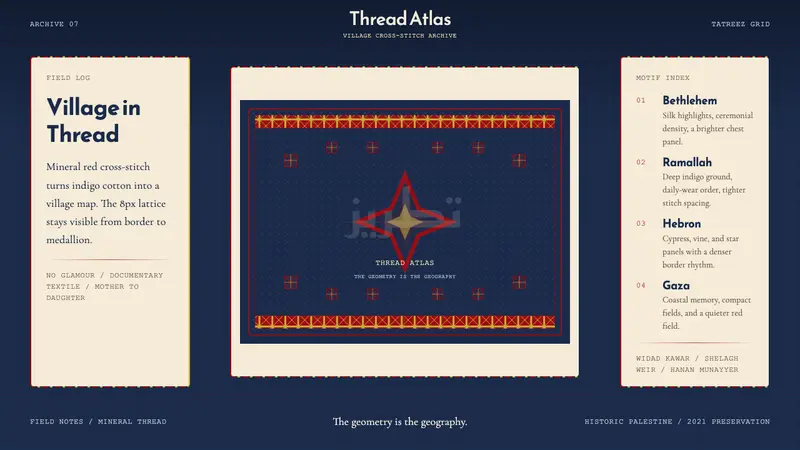 Palestinian Tatreez Cross-StitchMemory in thread. Red cross-stitch on indigo cotton, built on an 8px grid.
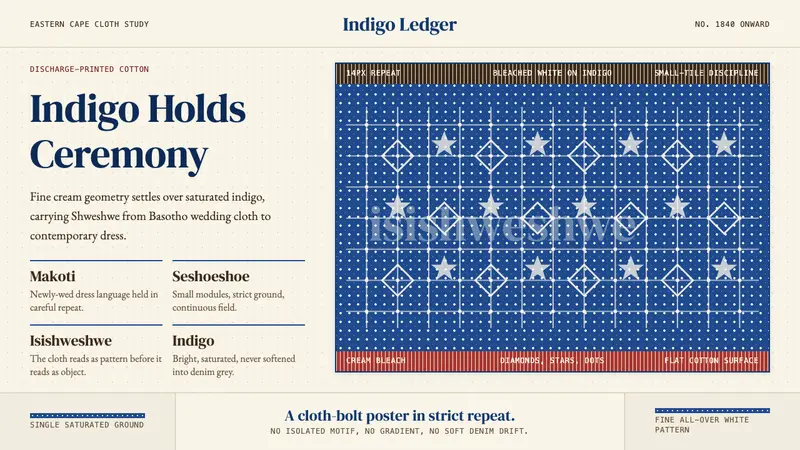 South African Shweshwe IndigoCeremony in indigo. Cream serif type and tiny bleached repeats tile a saturated cloth grid.
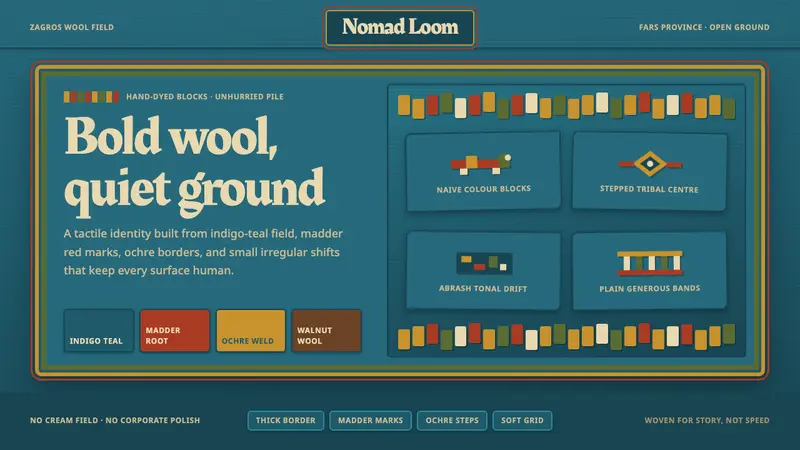 Persian Gabbeh RugBold wool, quiet ground. Indigo-teal field, ochre borders, madder block motifs.
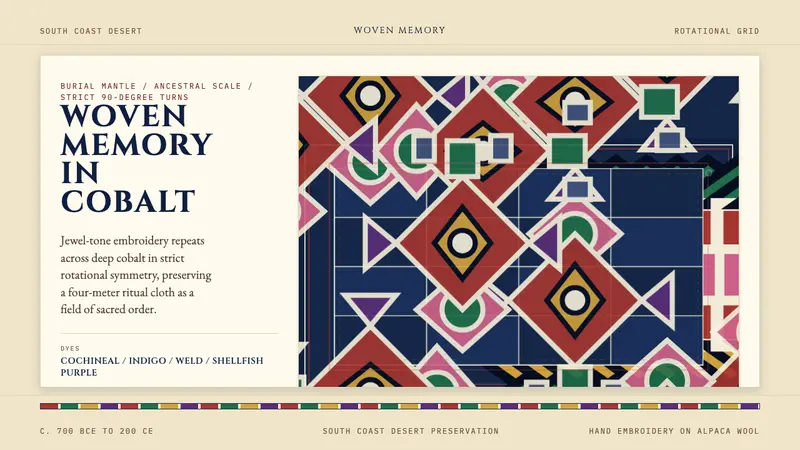 Paracas Andean TextileAncestral and exact. Jewel tones repeat on deep cobalt in strict 90° turns.